Skip to content

00   Pricing

Google Ads audit service and cost in 2026

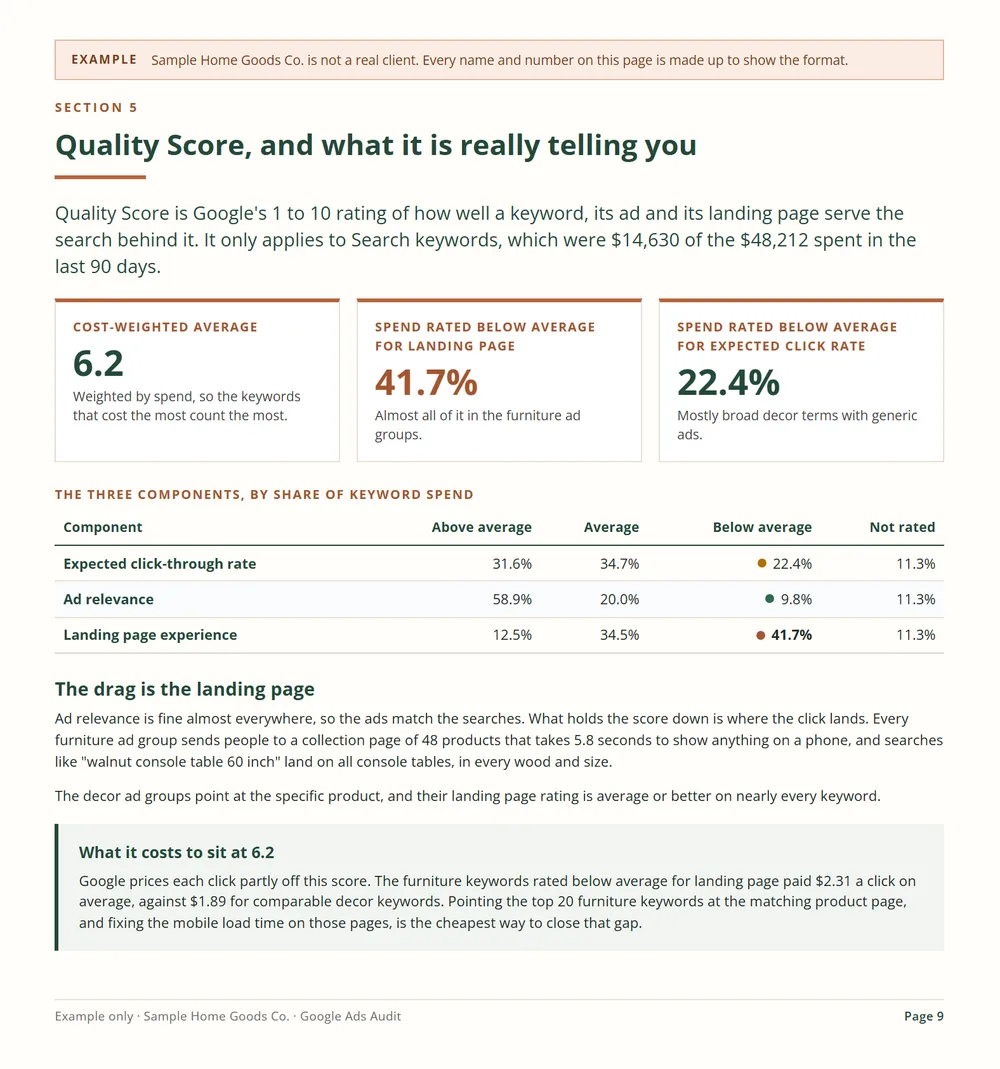
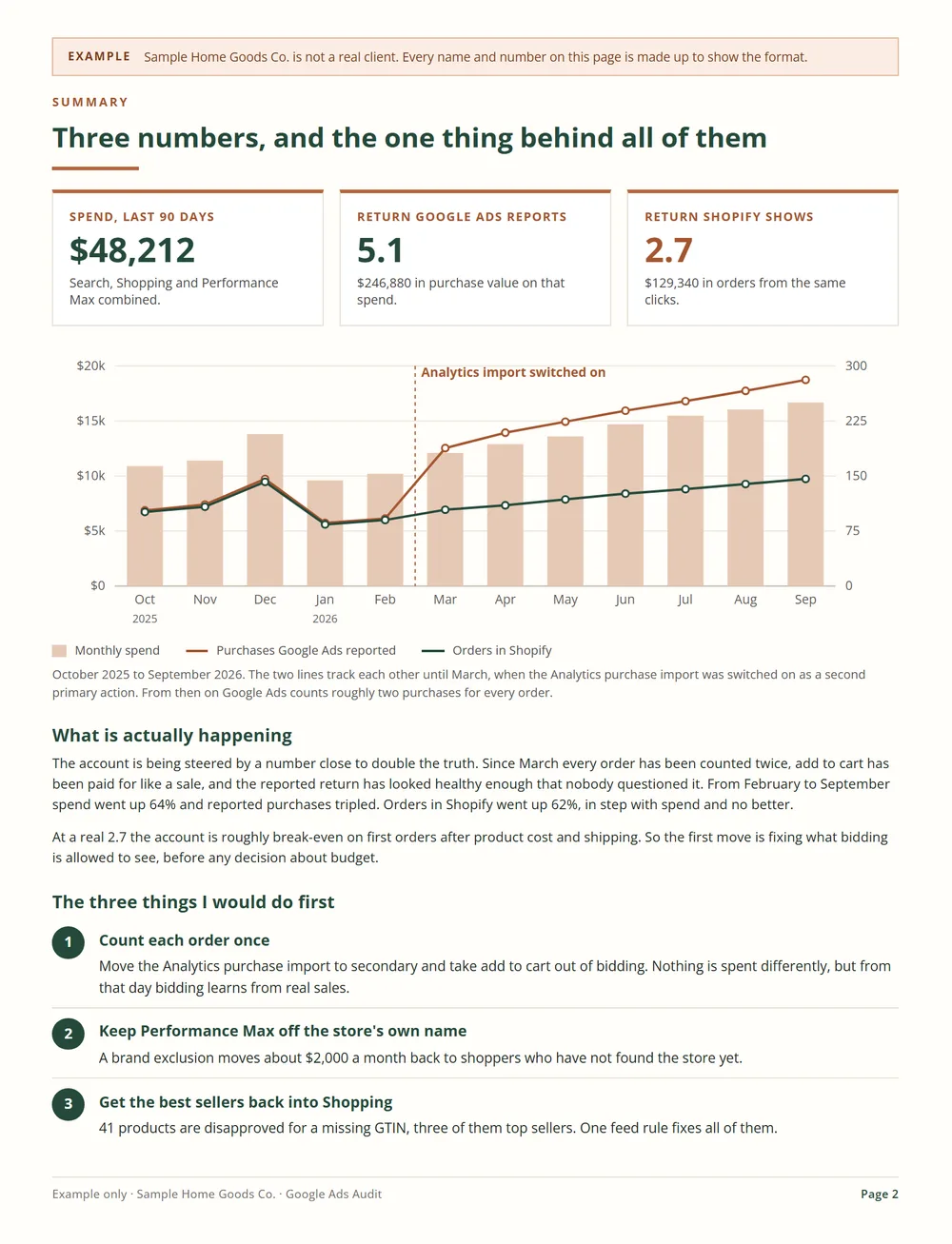
Independent Google Ads audits cost between $0 and about $2,600 on the pages I checked, depending on depth and operator tier, and more on large accounts. Free audit tools (WordStream Performance Grader, Optmyzr's free trial) cost zero and run shallow. Paid SaaS audit tools (Optmyzr, Adalysis, priced by monthly ad spend from a free trial) catch tracking gaps and obvious setup errors. Agency-led audits as part of a sales funnel are free but biased. Senior consultant audits ($500 to $2,600 one-time on the pages I checked, more on large accounts) deliver written diagnoses with structural recommendations a SaaS cannot match. My custom account audit is free for any account: 5 to 7 pages, written by me, back within 24 hours, no call and no retainer attached.

Skip to my audit options

02   The market

The five categories of
Google Ads audit.

Every Google Ads audit on the market falls into one of five categories. Each catches a different kind of leak. None of them catches all of them. The honest pricing read is below.

Category Cost Depth Bias Best for What it misses
Free SaaS grader $0 Shallow, automated Lead capture Accounts under $10K/mo Account architecture fit
Free agency lead magnet $0 Medium, sales-driven Retainer pitch Founders open to outsourcing Findings that lose the retainer
Free DIY workbook $0 Founder-driven, structural None (no upsell required) Operators who'll do the work Live anomaly detection
Paid SaaS subscription Priced by monthly ad spend Deep, automated Tool-fit bias Accounts over $50K/mo Whether the campaign type fits the business
Senior consultant memo $500 to $2,600 one-time, higher on large accounts Deep, human, written Low (one-time engagement) Accounts $25K to $300K/mo Weekly cadence between reviews

03   What you get at each tier

What each tier delivers,
and what it doesn't.

01

Free SaaS grader

$0

WordStream Performance Grader, Optmyzr free trial, Google's own Ads Recommendations tab.

A few minutes, a letter-grade dashboard, and a list of obvious wins. Quality score distribution, click-through rate vs benchmark, impression share lost to budget or rank, basic wasted-spend signals. The Performance Grader is genuinely useful as a first pass. WordStream grades the account on ten metrics and has run it on more than six million accounts, so the report is real. The page then offers to connect you with WordStream by LocaliQ, and a sales rep calls you.

What it misses: anything that isn't a rule. The grader cannot tell you that your three Performance Max campaigns are competing with each other on the same product set, or that your offline conversion uploads are double-counting because the GCLID round-trip is broken, or that the campaign structure was built by an agency two years ago for a business that has since pivoted. Those leaks live below the rule layer.

02

Free agency lead magnet

$0

KlientBoost, Disruptive Advertising, and the smaller shops running the same play.

An analyst works the account, the findings land in a deck, and someone senior presents them on a call. I haven't sat through every agency's version, so read the format as the pattern, not a spec. Quality ranges widely. A specialist agency in your vertical can flag five-figure leaks in an hour. A generalist running the same checklist on every account regardless of fit will read interchangeably across industries.

The honest read: an agency audit is a sales tool. That doesn't make it worthless. It makes the incentives obvious. The audit is designed to surface enough pain to justify a retainer, which means it leans heavy on findings that argue for ongoing management and light on findings a founder could fix in an afternoon. Take the audit, mine the three highest-impact findings, decline the retainer unless the math is independently strong.

03

Free DIY workbook

$0

My 25-page Google Ads Setup Audit PDF, plus a handful of similar workbooks from other senior operators.

The category most founders skip because it doesn't feel like a "platform." A workbook makes the operator type the numbers in by hand, and that is the moment most leaks become obvious. A tool that runs in the background while a founder ignores it does nothing. The 25-page version I publish walks an account through ten structural settings, gives you the click path for each fix, and ends with a four-week clean-up plan.

What it catches: structural and strategic issues a founder can act on the same day. What it misses: live anomaly detection, weekly cadence, account-specific quality score history. A workbook is a snapshot tool, not a monitor. For accounts spending $5K a month or more, this is the right starting point and usually the only one needed.

04

Paid SaaS subscription

Priced by ad spend

Optmyzr (Essentials, Premium and Enterprise plans priced by monthly ad spend, 14-day free trial), Adalysis (plans priced by monthly ad spend, 30-day free trial, unlimited Google and Microsoft Ads accounts), the paid tiers of Adzooma and Opteo. Optmyzr lists a starting price of $209 a month and scales it by spend; Adalysis prices off a spend slider with no flat figure.

The heavyweight category. Optmyzr's rule engine catches issues a manual review misses, and its quality-score tracker is the cleanest in the market. Adalysis is stronger on responsive search ad analysis: if RSAs are the bottleneck (low ad strength, weak headline variance, asset reporting gaps), Adalysis pays for itself faster. Both run continuous monitoring, not a one-time snapshot.

What they catch: bid anomalies, match-type drift, ad strength decay, quality score declines, budget pacing issues, search query waste. What they miss: whether the account architecture matches the business model. Whether the conversion setup is double-counting. Whether the wrong campaigns are being scaled. The expensive structural calls live outside the rule engine, which is why paid SaaS works best as a layer on top of a human review, not as a replacement for one.

05

Senior consultant memo

$500 to $2,600 one-time

Independent senior operators with 7+ years in paid media. The market charges $500 to $2,600 for one, more on large accounts. Mine is free.

The output is a written memo that names the three to five highest-impact changes, ranks them by expected lift in recoverable monthly dollars, and includes the implementation steps a founder or in-house marketer can run without the consultant present.

What it catches: structural decisions, attribution gaps, conversion-setup errors, account architecture mismatches, the things automated tools never flag. What it misses: weekly cadence. The memo is a snapshot, not a subscription. Pair it with a paid SaaS for ongoing monitoring if the account warrants both.

Why mine is free: the audit is how I start every engagement, so the hours were going to be spent either way. The paid work is the fix. That's the Tracking Sprint at $2,500 when the conversion tracking can't be trusted, or a retainer when the account needs an operator, and only when the audit makes the case. When it doesn't, you keep the audit and there's nothing to buy.
04   The honest cut

When free is
enough on its own.

Most founders pay for an audit they didn't need. The opposite is also common: founders who refuse to pay for an audit when the math overwhelmingly says they should. The cut between the two is sharper than vendors will tell you.

Spend under $10,000 a month

Run the WordStream Performance Grader and a DIY workbook. That is the entire audit. A consultant memo at the market's $500 to $2,600 can't return enough efficiency to cover itself in under six months at that spend level, and a paid SaaS subscription adds a monthly bill to monitor an account that size. The math says free, and my custom audit is open to accounts this size too.

Spend $10K to $25K a month, account under 12 months old

Free is still enough. Most accounts under a year old haven't built up enough structural debt to need human surgery. Run the free grader, work through the DIY workbook, fix the obvious settings. Reassess at month 13 or when monthly spend crosses $25K, whichever comes first.

Spend any level, but you'll never implement the fixes

The honest one. If the last three audit reports (free or paid) sat in your inbox unread, paying for a fourth one doesn't fix anything. Hire someone to do the work, or pause the audits and run the account on autopilot until you can. A diagnosis without an operator to execute it is a PDF, not a turnaround.

You're testing whether to fire your agency

A free competing-agency audit will tell you what you want to hear about how bad the incumbent is. A free DIY workbook will tell you which of your incumbent's choices were defensible and which were lazy. Both cost zero. The workbook is more honest because the workbook isn't pitching for the retainer.

05   Free vs paid

Free Google Ads audit vs paid audit,
side by side.

The two columns put the figures from the sections above in one place. The named-provider table under it is the paid-audit market my free audit is measured against, with each price read off the provider's own page. My own audit sits across both columns: a written memo from me, like the paid column, at $0 for any account at any spend level, back within 24 hours.

  Free audit Paid audit
Who runs it You with the workbook, an automated grader, or an agency analyst A senior operator, read-only, inside the account
Time in the account Under five minutes for a grader; agencies don't publish analyst time Three to six hours, plus two to three hours writing the memo
What you get A letter-grade dashboard, a templated deck, or your own filled-in workbook A written memo, fixes ranked by recoverable monthly dollars
Bias Lead capture or a retainer pitch. The workbook has neither No retainer attached, no upsell in the memo
Right for Spend under $25K a month, or an account under a year old Spend $25K to $300K a month, inherited accounts, pre-scale checkpoints
Cost $0 $500 to $2,600 across the providers below

My custom account audit takes the paid column's deliverable at the free column's price. Submit the URL at /audit-request/.

Who sells a paid Google Ads audit,
and for how much.

Prices and turnaround as of September 2026, read off each provider's own page. Where a page states no price, the row says so. Free agency audits sit in the last row because the audit is the opening move of a retainer pitch, and the free tools from section 02 are left out because they do not compete with a written memo.

Provider What you get Turnaround Price Retainer required Price published
Conner Crowe (this site) 5 to 7 page written audit by Conner, read-only or public data 24 hours Free, any account size No Yes
ScaleMarketer Written 22-point action plan plus a recorded live walkthrough, read-only access. Built for Shopify DTC brands 5 business days $499 flat, credited to month one if you sign a management contract within 14 days No Yes
Josiah Roche Ranked action list of what to fix first, reviewed by him personally 1 to 2 business days $500 to $1,500 one-time, tiered by monthly spend up to $30K No Yes
Sarah Stemen Video walkthrough of the account plus written recommendations Within 7 business days of account access $750 flat fee No Yes
Terzetto Digital In-depth analysis, tiered by campaign count (up to 5, 10 or 15 campaigns) Not stated $750 to $2,600 by campaign count No Yes
Online Labs (Dan Kabakov) Scorecard across ten surfaces, a tiered 90-day action plan, and a 60-minute walkthrough call 7 to 10 business days $800 one-time. A free tier exists for accounts spending $2,000+ a month No Yes
jyll 1-page scorecard plus 2 to 4 pages of recommendations. No implementation included Within 1 week From US$1,000, or 6% of trailing 90-day ad spend No Yes
KlientBoost, Disruptive Advertising An analyst review and a findings deck, walked through on a call. KlientBoost lists a 90-day roadmap; Disruptive lists a strategy proposal Not published $0 Positioned as the first step of a management engagement. KlientBoost lists its audit for accounts spending $5,000 a month or more; Disruptive publishes no minimum Not applicable

Each provider name links to the page the price was read from. If a provider changes a price, their page wins over this table. Tell me at /contact/ and I will correct the row.

06   The math

When paid
earns its keep.

The arithmetic for a paid audit is easier than vendors make it sound. Recoverable monthly dollars need to exceed the audit price within 90 days. That's the entire test. With mine there is no price at all. Submit the URL, or grant read-only access if you want it written from inside the account, and the test moves to whether you'll ship the fixes.

Spend over $25,000 a month

At $25K/mo, a single 10% efficiency gain returns $2,500 a month. That covers the market's $500 to $2,600 memo inside a month if it surfaces one such gain. The structural fixes a senior memo catches (campaign type mismatch, broken attribution, scaled-the-wrong-thing) routinely return 15% to 40%. The expected value is heavily positive at this spend level, and with a free audit there's no memo price to cover.

Account inherited from a prior agency or operator

The single highest-ROI audit scenario. Inherited accounts carry the cumulative structural debt of every previous operator's preferences. A senior memo at $500 to $2,600 catches 6 to 18 months of accumulated drift and gives you a defensible reason to consolidate or rebuild without guessing.

You're spending $50K+/mo and have never paid for a human review

The math here isn't close. A 5% gain on $50K/mo is $2,500 a month, $30K a year. The audit price is a rounding error against the recovery. The reason it doesn't get done is usually not money. It's the founder hoping the agency is already doing this. They aren't.

You're about to scale spend 2-3x

An audit before a scale-up is the cheapest insurance in performance marketing. Doubling spend on a structurally broken account doubles the leak rate. A senior memo before a $50K-to-$150K scale catches the issues that would cost six figures to find through volume losses.

07   Buyer's checklist

What to look for
in an audit deliverable.

The deliverable signals more about quality than the price tag does. Four things to look for, in priority order.

  1. 01

    Written diagnosis, not a slide deck.

    A written document in plain prose. Sections per finding. Numbers in the text, not in chart legends. Slide decks are sales artifacts. Memos are operating documents.

  2. 02

    Named structural fixes.

    "Improve account efficiency" is not a finding. "Consolidate the three Performance Max campaigns running against the same product set into one campaign with asset groups split by margin tier" is a finding. If the recommendations could fit verbatim on another account, they aren't real.

  3. 03

    Ranked by recoverable monthly dollars.

    Every finding should be tagged with a dollar estimate. Not a percent. A monthly dollar figure against current spend. The ranking forces the consultant to be honest about what is worth fixing first.

  4. 04

    A 30-day action list.

    Day-by-day or week-by-week sequencing of the fixes, written so an in-house marketer or agency can execute without the consultant present. If the audit cannot be acted on without buying further work, the audit is a sales funnel.

08   Why the audit is free

The two ways
I run an audit.

Both free. The first is the 25-page workbook you run yourself. The second is a written custom account audit I send back within 24 hours, for any account at any spend level. Neither has a price because the audit is how I start every engagement. The paid work is the fix, and only when the audit justifies it.

01

Free: the Setup Audit PDF

$0

Twenty-five pages. Twelve minutes to read. No email gate. Ten structural settings I check on every account, the exact menu path to fix each one, and a four-week sequence to clean it all up. The only ask in it is a free thirty-minute audit call, near the end. Nothing else in it pitches.

Best for

  • →Accounts spending $5K a month or more
  • →Founders who'll do the work themselves
  • →Anyone deciding whether to request the written one

Format

PDF download, no signup. Optional check-in email after seven days if you want it.

02

Free: the custom account audit

$0

Five to seven pages, written by me about your account, back within 24 hours. No call required to receive it and no nurture sequence attached. It covers the conversion-tracking setup, the signal Smart Bidding is being fed, the top three leak points ranked by spend impact, and one change you can ship this week without hiring anyone.

Best for

  • →Any business running paid acquisition, at any spend level
  • →Founders who want a second opinion on an agency-run account
  • →Anyone who wants a written read before booking a call

Format

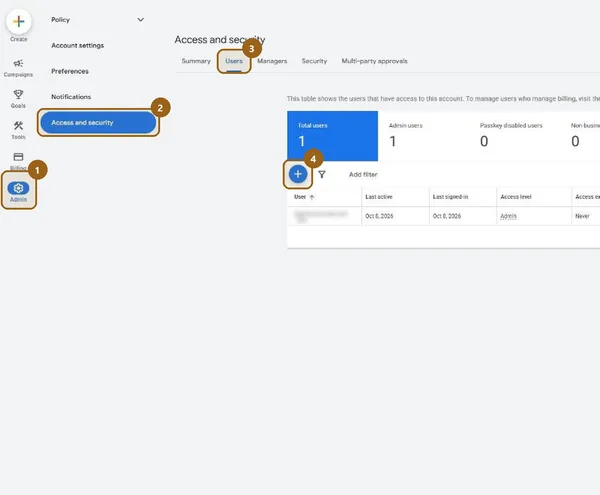
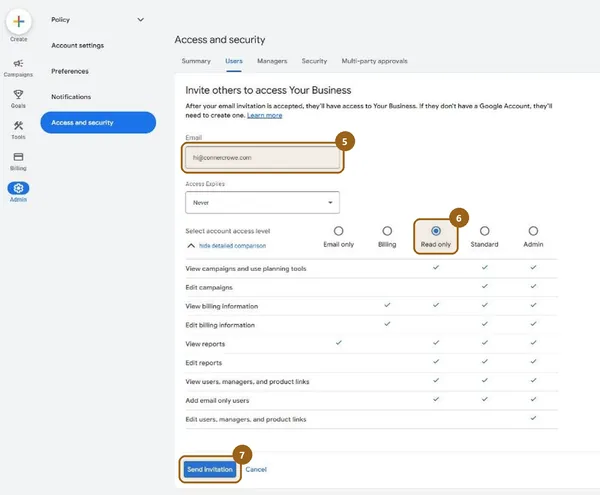
Written audit within 24 hours. Submit a URL, no account access needed. Where an account is shared, read-only.

03

Paid: the fix, if the audit calls for it

Fix from $2,500

The audit itself stays free and ends with a ranked list. If the top item is conversion tracking that can't be trusted, the Tracking Sprint rebuilds it as a one-off project at $2,500, two to four weeks, no retainer. If the account needs an operator on it every week, retainers run from $2,500 a month for Google Ads only to a full program from $8,500 a month. If the audit says the account is sound, there's nothing to buy.

Best for

  • →Accounts whose audit named tracking as the first fix
  • →Inherited accounts with accumulated structural debt
  • →Pre-scale checkpoints before a 2-3x budget increase

Format

Scoped from the audit, never before it. Every public price and minimum is on /pricing/.

One note on the price. Free means free at every spend level, with no paid tier above it. The only thing that scales with the account is the fix, and the fix is priced on /pricing/, not here. The free PDF is the right first step wherever you'd rather do the digging yourself.

09   FAQ

The questions
I get on this.

What does a Google Ads audit cost in 2026?
Google Ads audits range from $0 to about $2,600 on the pages I checked, and higher on large accounts. Free SaaS graders cost zero and run shallow. Paid SaaS audit tools (Optmyzr, Adalysis) are priced by monthly ad spend from a free trial and catch tracking and bid issues. Agency audits are free but biased toward retainer findings. Senior consultant audits run $500 to $2,600 one-time on the pages I checked, and scale higher on large accounts. Mine is free for any account: a 5 to 7 page written audit, back within 24 hours, requested at /audit-request/.
Do you offer a free Google Ads audit?
Yes. Both of the Google Ads audits I run are free. The Setup Audit is a free 25-page PDF workbook you run yourself against your own account, with no email gate. The custom account audit is written by me for any account at any spend level: submit the URL at /audit-request/ and a 5 to 7 page written audit comes back within 24 hours. No call required, no retainer attached. I write it from public data or read-only access. Microsoft Advertising accounts are covered under the same terms.
Are free Google Ads audits worth running?
Yes, with a ceiling. The WordStream Performance Grader and Optmyzr free trial both surface obvious bid drift, low quality scores, and structural account warnings in a few minutes. They are the right starting point for accounts spending under $10,000 a month. They cannot diagnose tracking architecture, attribution gaps, or whether the campaign type matches the business model.
When does a paid Google Ads audit earn its keep?
My custom audit is free at every spend level: a 5 to 7 page written audit from me, back within 24 hours, so with mine the only question is whether you'll ship the fixes it names. A paid senior memo from another provider earns its keep once monthly spend crosses $25,000. At that level a single 10% efficiency gain returns $2,500 a month, which covers the $500 to $2,600 the market charges inside a month. Below $10,000 a month that math doesn't work and a free workbook delivers most of the same diagnosis.
Are agency Google Ads audits worth the time?
Agency audits are sales tools. KlientBoost and Disruptive Advertising both run capable analysts, and the review will surface real issues. The catch is the recommendations skew toward retainer-worthy findings and away from the kind of fix a founder could implement in an afternoon. Take the audit, keep the three best findings, then evaluate the retainer math independently.
How long should a Google Ads audit take?
A senior consultant audit takes 3 to 6 hours of focused work in the account, plus another 2 to 3 hours writing the diagnosis. Free SaaS graders finish in under five minutes because they only score against rule sets. The time gap is the entire point of the price gap.
What should a Google Ads audit deliverable include?
A written diagnosis with named structural fixes, each ranked by recoverable monthly dollars, plus a prioritized 30-day action list. Anything that arrives as a slide deck with red, yellow, and green dots is a sales asset. Anything that hands you a checklist your in-house team can run without the consultant is the real thing.

Three ways in

Start with the
free audit. Pay only
for the fix.

The free 25-page Setup Audit covers most accounts. The free custom account audit is the one I write for you, back within 24 hours, for any account. The paid work is the fix, and only where the audit says it's worth more than it costs.