Skip to content

Google Ads for multi-brand retailers

Same product. Same price. So why buy it here?

When you sell other companies' brands, the shopper can buy the exact same item from the brand, a marketplace or the dealer down the road. I build the account around what you can control: margin by brand, a feed that matches your store, ads that follow each dealer agreement, and a product page that gives people a reason to buy from you.

01   The problem

Your margin changes
with every brand.

A brand that sells only its own products sets its own price and keeps its own margin. A dealer doesn't. The advertised price is often fixed, the margin changes from brand to brand, and the same product shows up in the same Shopping results from several stores at once.

Most dealer accounts are still built like a single-brand store: one campaign, one target, revenue as the goal. That setup rewards whatever sells fastest, which is rarely what makes you the most money, and it can't see the difference.

  • Same product, often at the same advertised price, on the brand's site and at every other dealer
  • Per brand margin, set by each dealer agreement rather than by you
  • 1 ROAS target most accounts apply to every brand anyway
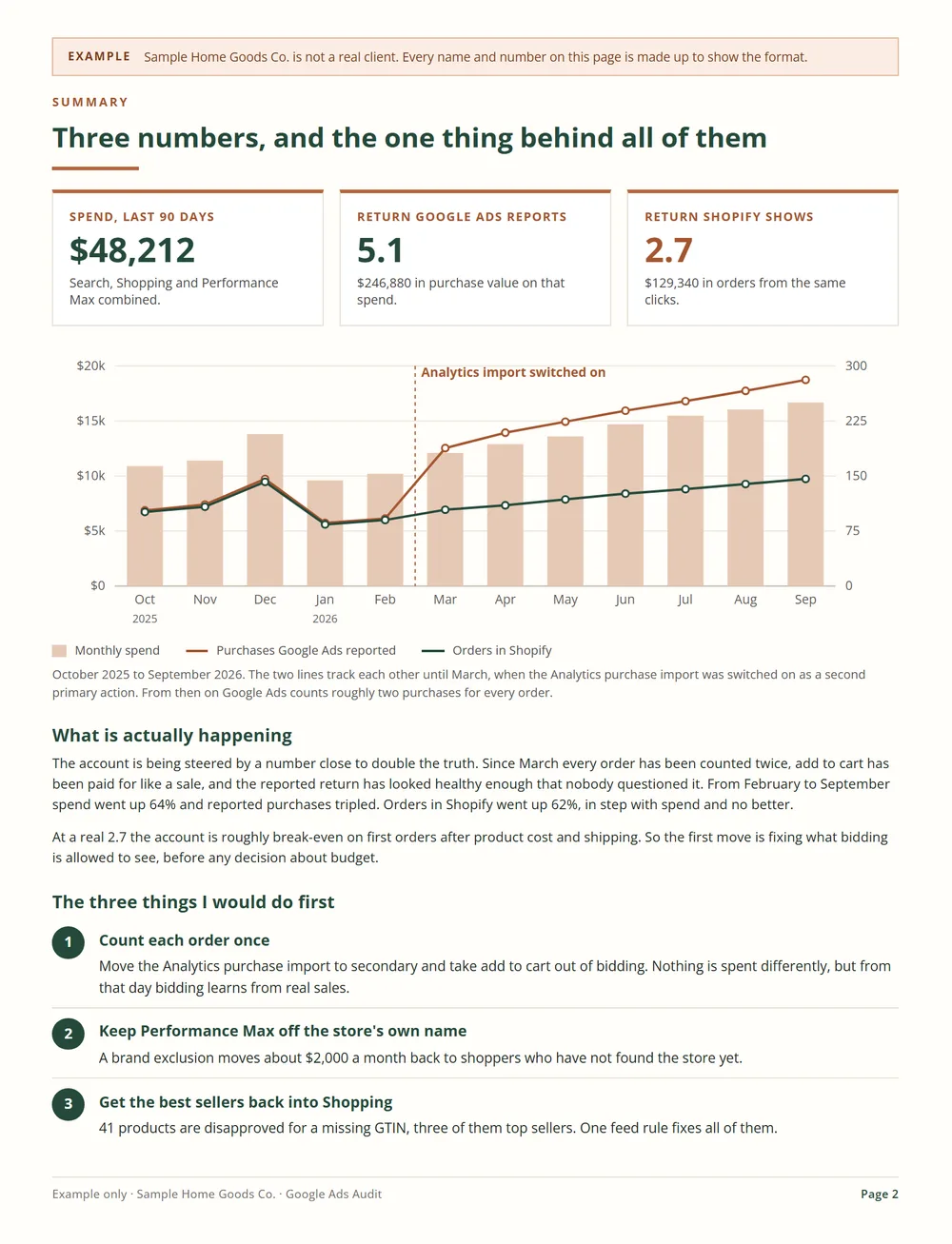
  • 99.4%+ of "All conversions" was not a purchase, in all 3 stores I benchmarked (N = 3)

The 99.4% figure is from my ecommerce tracking accuracy benchmark, which measured 3 stores (N = 3).

02   The diagnostic

Six leaks I check
first.

In priority order. The later fixes depend on the earlier ones being right.

  • One campaign for the whole catalog

    A single Performance Max or Shopping campaign spends where it already sells, which is usually your biggest brand's best sellers. The rest of the catalog barely serves, and you can't see which brand the money went to.

  • A revenue target on uneven margins

    Every dealer agreement sets a different margin. A ROAS target that is profitable on your best-margin brand loses money on the thinnest one, and the account can't tell them apart because it only sees revenue.

  • A feed that disagrees with the store

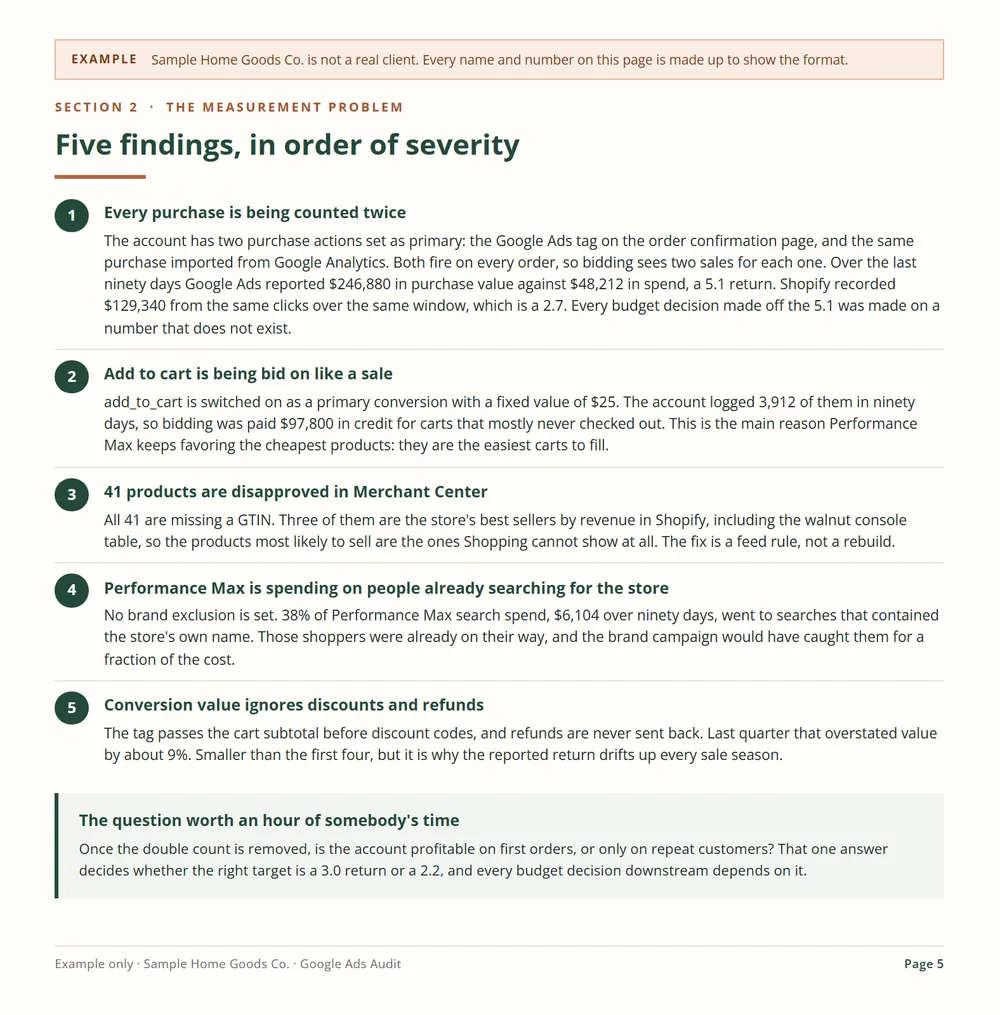
    Products you can sell show as out of stock in Merchant Center, items are missing GTINs, and titles are copied straight from the brand. Google either disapproves the product or shows it for the wrong searches.

  • Ads that break the dealer agreement

    Many brands restrict how authorized dealers advertise: no bidding on the brand name, no advertised price under MAP, specific wording for promotions. Accounts that never read those terms put the dealer relationship at risk for a few clicks.

  • A product page identical to everyone else's

    The shopper can find the same description and the same photos on the brand's site and at five other stores. If your page adds nothing, the click you paid for goes to whoever ships fastest or gave them a reason to stay.

  • Conversions that aren't purchases

    Add-to-carts and duplicate purchase tags counted as conversions make every brand look profitable. Smart Bidding then optimizes toward carts, and the margin math above is built on the wrong number.

03   The playbook

What I do for
multi-brand retailers.

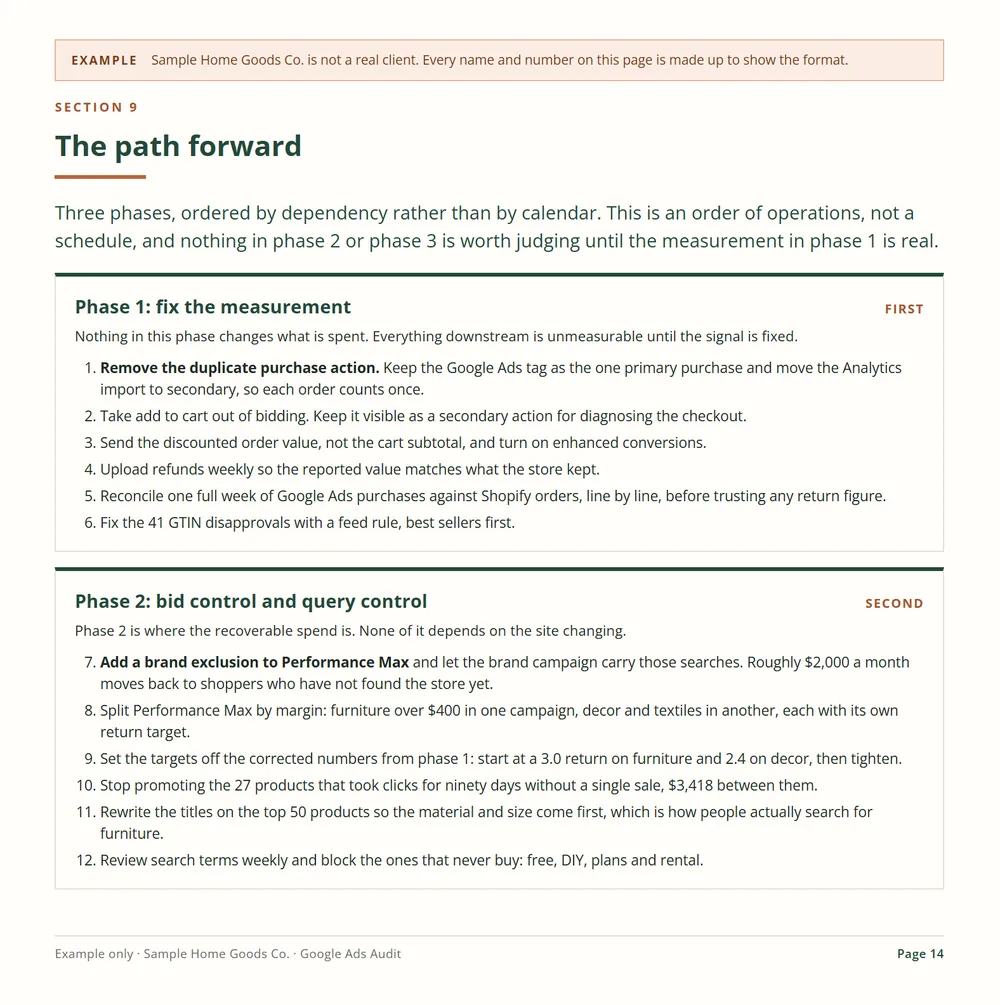
Six moves in the first 90 days, tracking first, because every margin decision after it depends on counting sales correctly.

  1. 01

    Count purchases once, and only purchases

    I start with the tracking: one purchase conversion, deduplicated, matched against the orders in the store. Cart events stay as signals, never as conversions. The method is The Tracking Stack.

  2. 02

    Map margin and rules by brand

    Before restructuring anything, I build one sheet: each brand you carry, its margin to you, its advertising rules from the dealer agreement and its share of revenue. That sheet sets the campaign structure and the targets.

  3. 03

    Split the account by brand and margin

    Brands go into campaign groups by margin tier, using custom labels in the feed, so each group gets a target it can make money at. A brand with thin margin gets a stricter target. The long tail gets its own budget instead of whatever is left over.

  4. 04

    Make the feed match the store

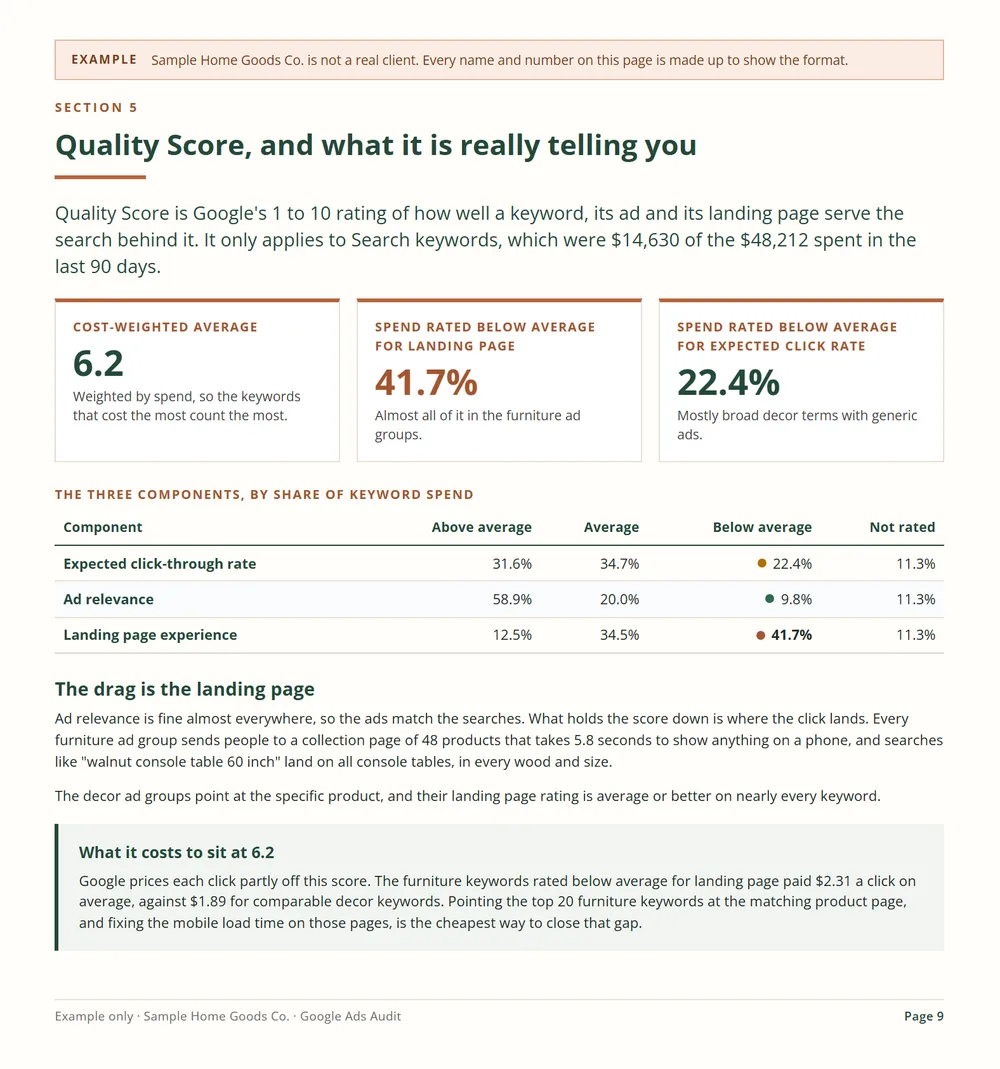
    Availability that matches what you can sell, GTINs on every item, titles rebuilt around how people search: brand, model, variant, size. Disapprovals cleared and the unpublished part of the catalog brought back in.

  5. 05

    Give the shopper a reason to buy here

    Your product page has to add something the brand's page doesn't: real stock, shipping speed, a comparison against the model next to it, setup help, a showroom or pickup if you have one. Those facts go into the page and into the ads.

  6. 06

    Follow up with the comparison shoppers

    Shoppers on the same product check several dealers before they buy. Retargeting and browse-abandonment email bring them back with the reasons from step 05, not a discount that eats a margin you already mapped.

04   Engagement levels

Three ways in.
Most start with tracking.

Every account starts with the free audit or a 30-minute call where I tell you which one fits. Pricing here is directional. The real quote comes on the call.

Tracking Sprint

The measurement fix. One deduplicated purchase conversion reconciled against your orders, so every decision after it is made on real sales.

$2,500 / project

One-time project

  • →Purchase tracking audited against store orders
  • →Duplicate and cart conversions removed from bidding
  • →Server-side tracking where it earns its place
  • →A written read on what the ad platforms were claiming
Start with the Sprint

Fractional Marketing Lead

The whole commercial program. Google, Meta, email and the storefront run as one system, planned around which brands you want to grow.

from $8,500 / month

Ongoing · month-to-month

  • →Everything in Imagery + Shopping
  • →Meta and retargeting for comparison shoppers
  • →Email flows built around brand and product interest
  • →Product page and storefront improvements
  • →Direct access. Same person on the call as on the keyboard.
Build the program

05   Fit

Who this is for.
Who it isn't.

Who this is for

  • →You carry several brands and sell them online, with or without a showroom
  • →Your margin is different on each brand and your ad account doesn't know it
  • →You can share your margin by brand and the advertising terms in your dealer agreements
  • →You want the account run by someone who reads the order book, not only the dashboard

Who this isn't for

  • ×You sell only your own brand (the ecommerce page fits better)
  • ×You mainly sell on marketplaces and the website is an afterthought
  • ×You want to win on price below the advertised minimum
  • ×You need a cheap set-and-forget feed tool

Selling your own brand? The ecommerce page covers that.

Ready to talk

Stop funding your biggest brand.
Start funding your margin.

Send me the account and I'll tell you within 24 hours where the spend is going by brand and what the tracking is really counting. Same person on the call as on the keyboard.

Or email hi@connercrowe.com.

FAQ

Before you ask.

How should a multi-brand retailer structure Google Shopping or Performance Max?

By margin, then by brand. Each brand you carry has its own margin, so I group brands into tiers with custom labels in the feed and give each tier a target it can make money at. One catalog-wide campaign on a single ROAS target funds your biggest brand and quietly loses money on the thin ones.

Can an authorized dealer bid on the brand names they carry?

It depends on the dealer agreement. Many brands restrict trademark bidding, advertised prices below MAP or certain promotion wording, and the terms differ from brand to brand. I read your agreements before building anything, and the account follows the strictest rule that applies to each brand.

How do I compete when the brand and other dealers sell the same product at the same price?

On everything except price. Real stock, shipping speed, setup help, a comparison against the next model, a showroom or pickup. Those facts go onto the product page and into the ads, and the account spends where your margin can afford to win.

Why do my products show as out of stock in Google when I can sell them?

Usually because the store lets the product be ordered at zero stock, on backorder or made to order, and the feed sends the stock count instead of an availability Google accepts. The fix is in the feed rules, not the product.

What does it cost?

Three ways in. A Tracking Sprint is $2,500 as a one-time project. Imagery + Shopping is from $3,950 a month for the Shopping, Performance Max and feed program. Fractional Marketing Lead is from $8,500 a month for the whole program. Both retainers are month-to-month.