Everything between the clickand the repeat purchase.
I own the path from first click through repeat purchase, with the ad account and storefront measured as one system. Apparel, beauty, supplements, food and beverage, accessories, and home and furniture. It starts with the measurement, because most stores are scaling spend on numbers that are quietly wrong.
The agency model wasn't built for numbers you can trust.
Blended ROAS averages branded search, remarketing, and real prospecting into one flattering number. Shipping, returns, and fees never make it onto the dashboard. So the algorithm optimizes toward the orders that look profitable and quietly lose you money. The fix is upstream of the ads.
7Things broken in the tracking on one inherited $40K/mo Shopify stack
28%Of one $6M brand's revenue ran margin-negative once shipping + fees were netted
$15M+Managed across ecommerce and service ad accounts
10 yrsOn the keys of Shopify and ecom accounts
Where the ROAS goes
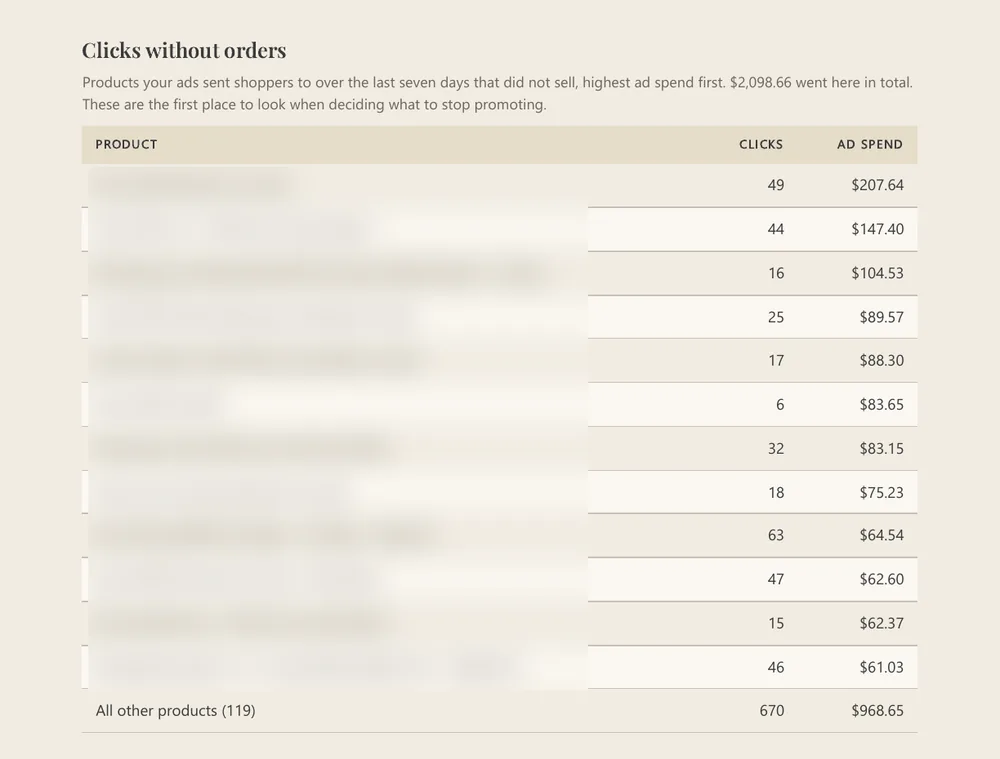
On one $6M Shopify audit, 28% of the revenue the dashboard called profitable was margin-negative once the real costs were netted out.
02 The full program
Seven disciplines. One operator.
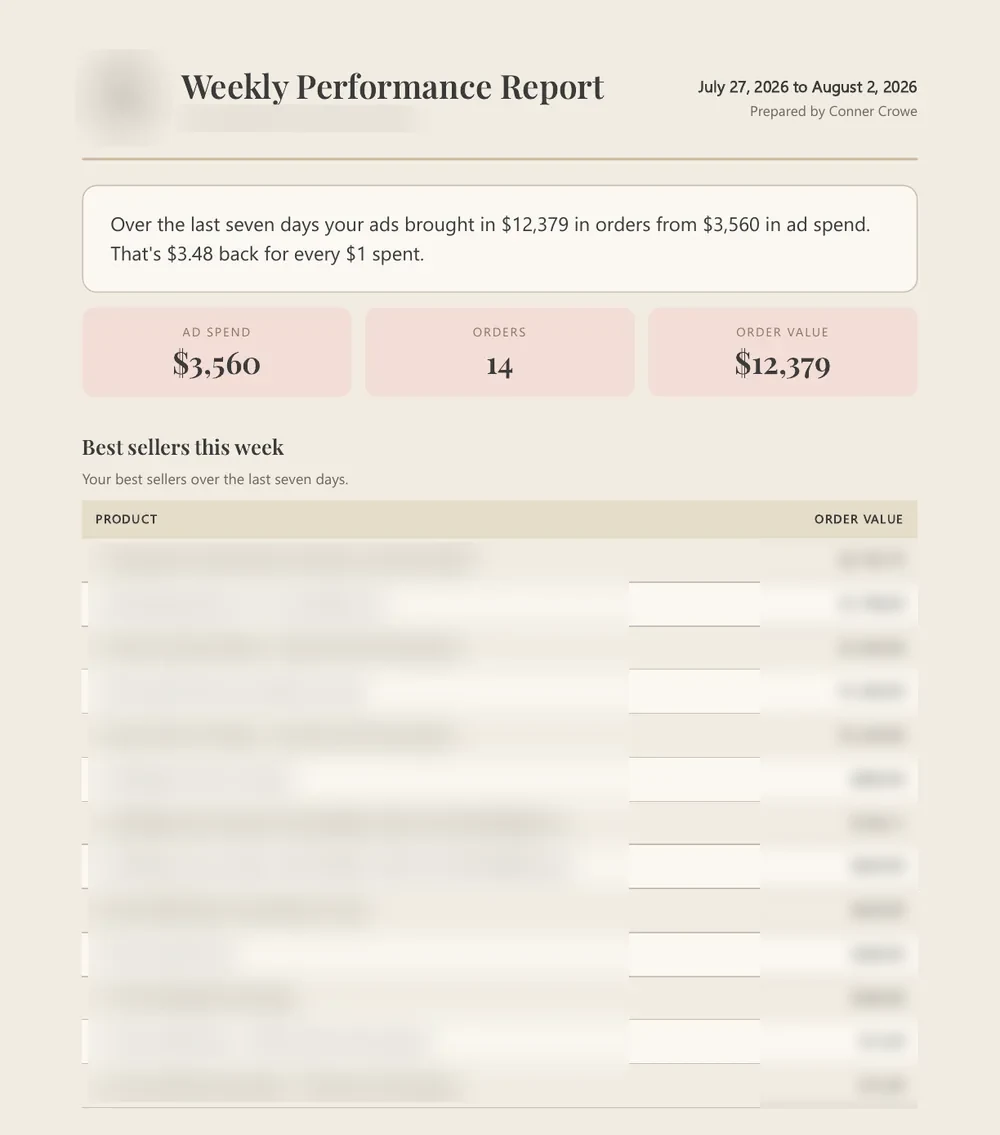
What an agency splits across four juniors and a project manager, I run as one program. The Tracking Stack ties campaign spend to contribution margin, so I can move budget based on profit.
Marketing strategy
I write the plan for positioning, channel budgets, and what to test next. I set the monthly targets against contribution margin and review them with you.
Google Ads program
Search, Shopping, PMax. Account structure, feed engineering, exclusions, branded-vs-prospecting separation. A decade and $15M+ managed on these keys.
Meta Ads program
Catalog ads, advantage+ where it earns its place, prospecting and retention split. Pixel and CAPI repair. Creative testing tuned to new-customer acquisition.
Conversion tracking + ROAS reconciliation
GA4, GTM (server-side where it earns its keep), the Tracking Stack, contribution-margin reconciliation against the real P&L. Written summary every Monday. The spine of this page.
Storefront + feed engineering
Shopify metafields, Merchant Center health, product-page conversion work, catalog hygiene across Google and Meta. The plumbing the ads run on.
Email + lifecycle
Klaviyo flows that own the second purchase: welcome, abandoned checkout, post-purchase, winback. The retention half of the click-to-customer arc.
These layers reconcile each campaign to contribution margin. The full architecture is public in the Tracking Stack.
01
One source of truth per platform
GA4, Google Ads, Meta, and Shopify reconciled so four dashboards stop telling you four different revenue numbers.
02
Server-side where it earns its keep
A server-side GTM container for the events that iOS, ad blockers, and cookie loss quietly drop. Not everywhere. Where the data leak is real.
03
Contribution margin, not blended ROAS
Shipping, returns, discounts, and platform fees netted out per order. The number that tells you whether the next budget increase funds growth or funds a cash crunch.
04
Branded vs prospecting separation
Branded search and remarketing pulled out of the blended number so you can see what new-customer acquisition actually costs. Most blended ROAS hides this.
05
Catalog + feed integrity
Merchant Center and Meta catalog health so Shopping and catalog ads stop silently suppressing half your inventory.
06
Weekly reconciliation, written
A Monday summary tying ad-platform numbers to Shopify and the P&L. The gap between the dashboard and the bank account, closed.
The compounding effect
Fix the signal and every dollar after it works harder. The algorithm stops chasing the cheap orders that lose money and starts finding the customers worth acquiring. The ROAS number on the dashboard often drops. The contribution margin on your P&L goes up. The two are not the same, and only one of them pays you.
Catalog-heavy home brands have a problem the rest of ecommerce doesn't: studio photography at $1,000+ per SKU, weeks per shoot, and Meta catalog ads that underperform on bare-product imagery. So for that vertical I run an in-house lifestyle photoshoot pipeline inside the engagement. One brand: a full catalog rendered in-house, zero studio days. It is the flagship build behind this whole practice.
Do you only work with home and furniture brands, or all of ecommerce?
I run the full program for any Shopify or DTC ecommerce store: apparel, beauty, supplements, food and beverage, accessories, consumer goods. Home, furniture, and decor is my deepest specialty, where I also run an in-house lifestyle imagery engine. That detail lives on the /for-home-brands page. For every other ecommerce category, the trunk is the same: strategy, paid acquisition, conversion tracking, storefront, email and lifecycle, run by one operator.
What kinds of ecommerce brands fit best?
DTC Shopify stores, roughly $1M to $30M in revenue, already spending on Google and Meta, where the founder is tired of stitching together an agency, a freelancer, and a part-time hire and wants one senior operator owning the whole funnel. If you are pre-revenue or sub-$500K, the math on a fractional lead rarely works yet. I will tell you that on the call rather than take the engagement.
Why lead with tracking instead of just running better ads?
Because Smart Bidding is now the bidding layer for both Google and Meta, and it optimizes against the conversion signal you feed it. If that signal is broken, and on the accounts I inherit it routinely is, then better ad management just helps the algorithm find the wrong customers faster. The Tracking Stack fixes the signal first. The full reference architecture is public at /frameworks/tracking-stack.
How is this different from the home-brands page?
Same operator, same trunk. The /for-home-brands page is the deep specialty for home, furniture, and decor, and it adds the in-house lifestyle photoshoot pipeline that those catalog-heavy brands need. This page is the broader ecommerce program for every other Shopify category, where the signature engine is measurement, not imagery. If you sell home goods, start there. Otherwise, start here.
Do you work with service businesses too?
Yes. /for-service-brands is the parallel program for law firms, healthcare, home services, and B2B. Different vertical playbook, same single operator. Pick the page that matches your business.
What does it cost?
Tracking Sprint is $2,500 / project. Acquisition + Tracking is from $3,950/mo on a 3 month minimum. Fractional Marketing Lead is from $8,500/mo on a 6 month minimum. Real prices are set on the call once I look at your store, your current ad spend, and the scope. No mystery pricing.
07 Start free
See the gaps before you ever book a call.
Two free resources, no email gate on the framework, no call required. Find out whether your store is quietly scaling on broken numbers before you spend another dollar.