How I Used Shopping and Performance Max to Build a Scalable Google Ads Funnel

How I used Shopping to create demand and Performance Max to capture high-intent buyers using a clean funnel strategy and proper attribution logic.

Services

Google Ads Strategy, Shopping Campaign Management, Performance Max Optimization, Conversion Tracking, Funnel Strategy

Services

Google Ads Strategy, Shopping Campaign Management, Performance Max Optimization, Conversion Tracking, Funnel Strategy

Services

Google Ads Strategy, Shopping Campaign Management, Performance Max Optimization, Conversion Tracking, Funnel Strategy

Tools

Google Ads, GA4, Shopify, Google Merchant Center

Tools

Google Ads, GA4, Shopify, Google Merchant Center

Tools

Google Ads, GA4, Shopify, Google Merchant Center

Value

By clearly separating demand creation and demand capture between Shopping and Performance Max, I scaled total revenue past $156,000 while keeping attribution clean and controllable.

Value

By clearly separating demand creation and demand capture between Shopping and Performance Max, I scaled total revenue past $156,000 while keeping attribution clean and controllable.

Value

By clearly separating demand creation and demand capture between Shopping and Performance Max, I scaled total revenue past $156,000 while keeping attribution clean and controllable.

Timeline

90 Days
Timeline

90 Days

Timeline

90 Days

Introduction

This account is a great example of how misleading last-click attribution can be if you do not understand the role each campaign type plays in the buying journey.

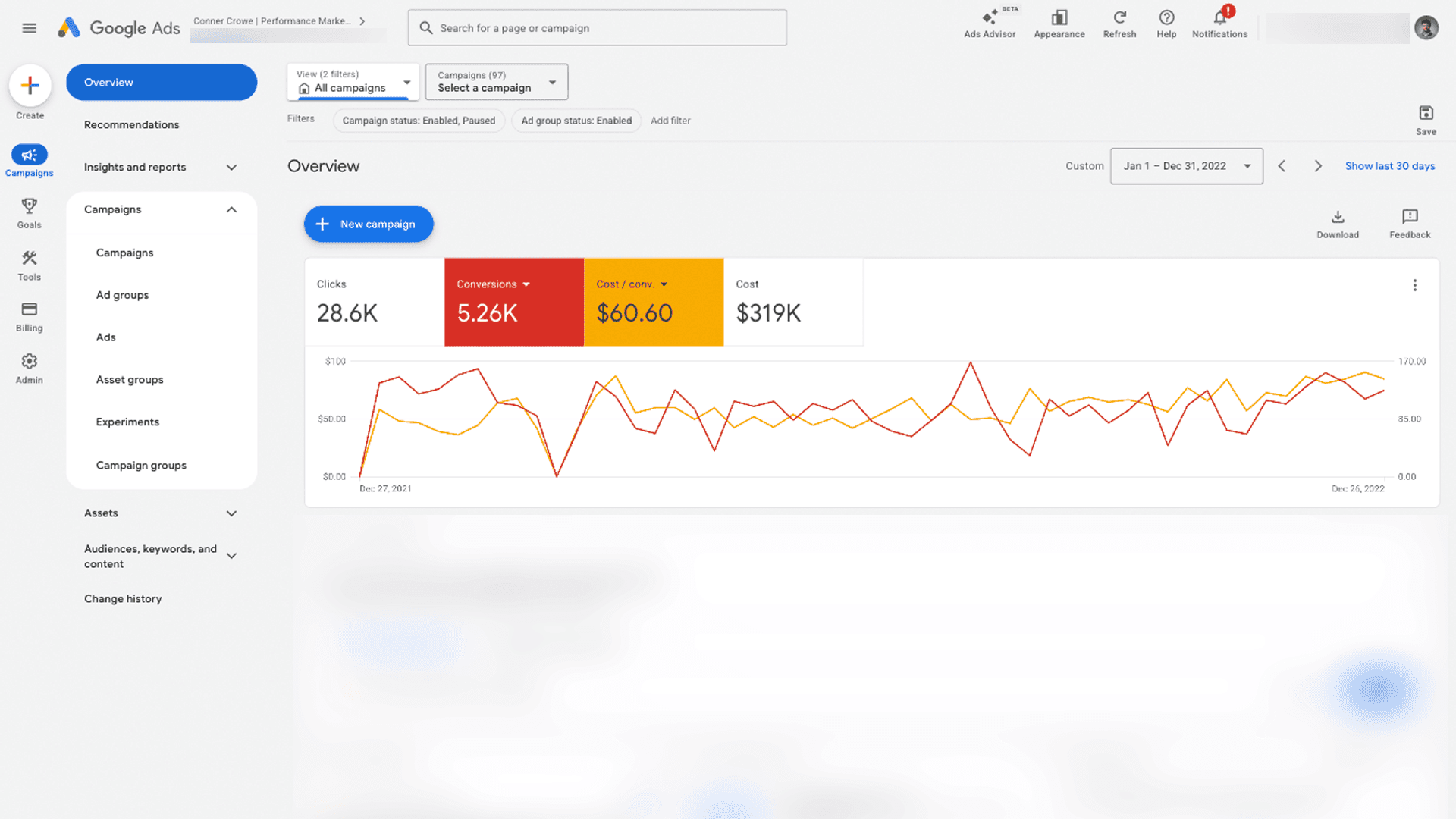
Over a 90-day period, this account generated over $156,000 in tracked conversion value on roughly $11,000 in ad spend, while running a hybrid setup of Performance Max, Shopping, and Search. At first glance, Performance Max appeared to be doing most of the work. In reality, Shopping was doing far more than the surface-level reports suggested.

Instead of choosing one campaign type and cutting the other, I structured the account so Shopping created demand and Performance Max captured it. That separation of roles is what ultimately stabilized performance and allowed revenue to scale.

This account is a great example of how misleading last-click attribution can be if you do not understand the role each campaign type plays in the buying journey.

Over a 90-day period, this account generated over $156,000 in tracked conversion value on roughly $11,000 in ad spend, while running a hybrid setup of Performance Max, Shopping, and Search. At first glance, Performance Max appeared to be doing most of the work. In reality, Shopping was doing far more than the surface-level reports suggested.

Instead of choosing one campaign type and cutting the other, I structured the account so Shopping created demand and Performance Max captured it. That separation of roles is what ultimately stabilized performance and allowed revenue to scale.

This account is a great example of how misleading last-click attribution can be if you do not understand the role each campaign type plays in the buying journey.

Over a 90-day period, this account generated over $156,000 in tracked conversion value on roughly $11,000 in ad spend, while running a hybrid setup of Performance Max, Shopping, and Search. At first glance, Performance Max appeared to be doing most of the work. In reality, Shopping was doing far more than the surface-level reports suggested.

Instead of choosing one campaign type and cutting the other, I structured the account so Shopping created demand and Performance Max captured it. That separation of roles is what ultimately stabilized performance and allowed revenue to scale.

Problem

On paper, Performance Max looked like the clear winner. It was getting the majority of purchase credit and showing the strongest ROAS. Shopping, on the other hand, appeared inconsistent and under-attributed for purchases.

The issue became obvious once I looked beyond last-click reporting. Every time Shopping campaigns were launched or scaled, total order volume across the entire account went up, including inside Performance Max. When Shopping slowed down, Performance Max performance followed.

That told me something important:
Shopping was creating demand, and Performance Max was intercepting that demand later in the journey.

At the same time, Shopping was struggling to get consistent purchase-level attribution due to long consideration cycles, multi-device behavior, and customers sharing products with partners before buying. If Shopping had been judged strictly by purchase credit alone, it would have been shut down incorrectly.

The real problem was not performance. It was misaligned attribution and funnel misunderstanding.
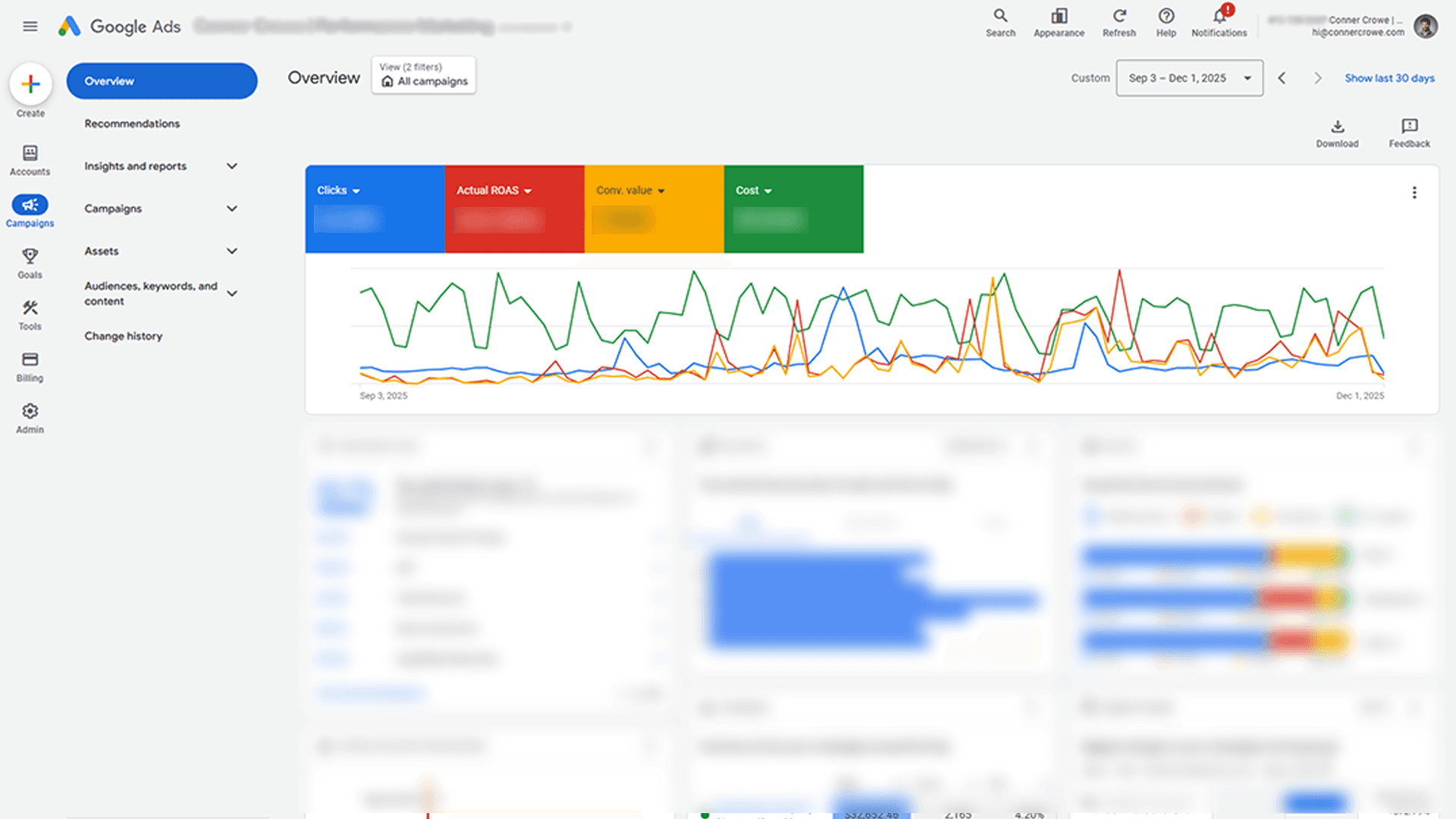
On paper, Performance Max looked like the clear winner. It was getting the majority of purchase credit and showing the strongest ROAS. Shopping, on the other hand, appeared inconsistent and under-attributed for purchases.

The issue became obvious once I looked beyond last-click reporting. Every time Shopping campaigns were launched or scaled, total order volume across the entire account went up, including inside Performance Max. When Shopping slowed down, Performance Max performance followed.

That told me something important:
Shopping was creating demand, and Performance Max was intercepting that demand later in the journey.

At the same time, Shopping was struggling to get consistent purchase-level attribution due to long consideration cycles, multi-device behavior, and customers sharing products with partners before buying. If Shopping had been judged strictly by purchase credit alone, it would have been shut down incorrectly.

The real problem was not performance. It was misaligned attribution and funnel misunderstanding.
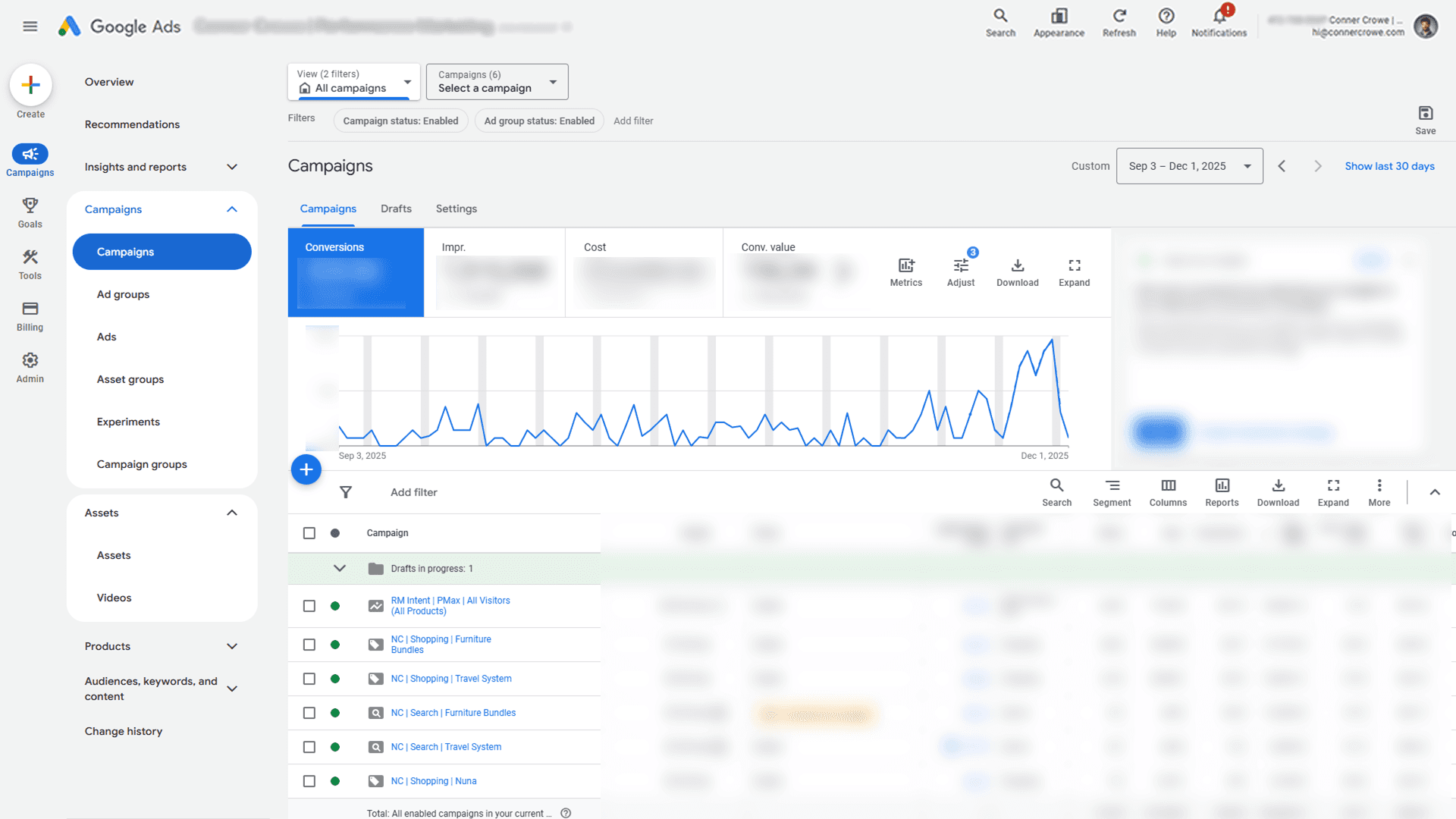
On paper, Performance Max looked like the clear winner. It was getting the majority of purchase credit and showing the strongest ROAS. Shopping, on the other hand, appeared inconsistent and under-attributed for purchases.

The issue became obvious once I looked beyond last-click reporting. Every time Shopping campaigns were launched or scaled, total order volume across the entire account went up, including inside Performance Max. When Shopping slowed down, Performance Max performance followed.

That told me something important:
Shopping was creating demand, and Performance Max was intercepting that demand later in the journey.

At the same time, Shopping was struggling to get consistent purchase-level attribution due to long consideration cycles, multi-device behavior, and customers sharing products with partners before buying. If Shopping had been judged strictly by purchase credit alone, it would have been shut down incorrectly.

The real problem was not performance. It was misaligned attribution and funnel misunderstanding.

Solution

Instead of trying to force one campaign type to do everything, I rebuilt the account around clearly defined roles in the funnel.

Shopping became the demand creation layer. Its job was to introduce new shoppers, drive product discovery, and generate consistent add-to-cart and checkout activity. Because Shopping was not receiving reliable purchase attribution due to long buying cycles and multi-device behavior, I temporarily used micro-conversions like Add to Cart and Begin Checkout as optimization signals. This allowed Shopping to continue learning and feeding the funnel without stalling.

Performance Max became the demand capture layer. Its role was to close returning visitors, brand traffic, and high-intent users across Google’s full network. It remained strictly optimized for Purchase using a Target ROAS strategy.

I also aligned budgets so neither side of the funnel was being starved. Shopping was funded well enough to continuously introduce new demand, and Performance Max was funded aggressively enough to consistently capture that demand when users returned later in the buying process.

The goal was not to make Shopping outperform Performance Max or vice versa. The goal was to let each campaign type do the job it is actually built for.
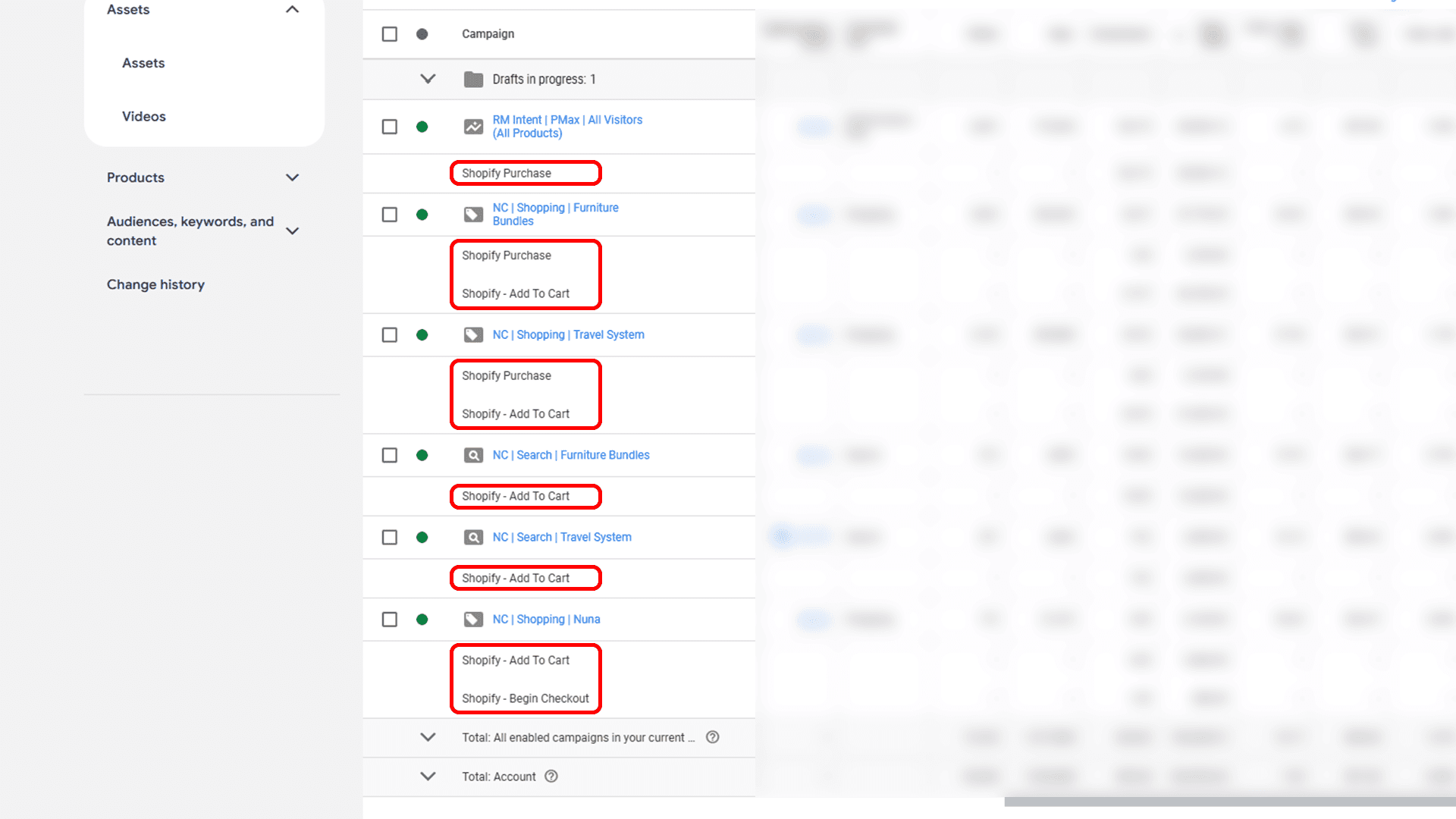
Instead of trying to force one campaign type to do everything, I rebuilt the account around clearly defined roles in the funnel.

Shopping became the demand creation layer. Its job was to introduce new shoppers, drive product discovery, and generate consistent add-to-cart and checkout activity. Because Shopping was not receiving reliable purchase attribution due to long buying cycles and multi-device behavior, I temporarily used micro-conversions like Add to Cart and Begin Checkout as optimization signals. This allowed Shopping to continue learning and feeding the funnel without stalling.

Performance Max became the demand capture layer. Its role was to close returning visitors, brand traffic, and high-intent users across Google’s full network. It remained strictly optimized for Purchase using a Target ROAS strategy.

I also aligned budgets so neither side of the funnel was being starved. Shopping was funded well enough to continuously introduce new demand, and Performance Max was funded aggressively enough to consistently capture that demand when users returned later in the buying process.

The goal was not to make Shopping outperform Performance Max or vice versa. The goal was to let each campaign type do the job it is actually built for.

Instead of trying to force one campaign type to do everything, I rebuilt the account around clearly defined roles in the funnel.

Shopping became the demand creation layer. Its job was to introduce new shoppers, drive product discovery, and generate consistent add-to-cart and checkout activity. Because Shopping was not receiving reliable purchase attribution due to long buying cycles and multi-device behavior, I temporarily used micro-conversions like Add to Cart and Begin Checkout as optimization signals. This allowed Shopping to continue learning and feeding the funnel without stalling.

Performance Max became the demand capture layer. Its role was to close returning visitors, brand traffic, and high-intent users across Google’s full network. It remained strictly optimized for Purchase using a Target ROAS strategy.

I also aligned budgets so neither side of the funnel was being starved. Shopping was funded well enough to continuously introduce new demand, and Performance Max was funded aggressively enough to consistently capture that demand when users returned later in the buying process.

The goal was not to make Shopping outperform Performance Max or vice versa. The goal was to let each campaign type do the job it is actually built for.

This case study highlights one of the most common mistakes I see in modern Google Ads accounts, judging campaigns based only on last-click performance instead of understanding their true role in the buying journey.

Performance Max is excellent at capturing demand. Shopping is critical for creating it. When both are allowed to work together with clear intent, revenue becomes more predictable and much easier to scale long term.

If I had shut down Shopping just because Performance Max looked better on paper, overall performance would have dropped within weeks. Instead, by keeping both sides of the funnel funded and aligned, this account was able to scale past $365,000 in tracked revenue without relying on misleading attribution.

The takeaway is simple. Do not turn off your demand engine just because your demand capture campaign looks stronger in reporting. Long-term growth only happens when both are working together.

This case study highlights one of the most common mistakes I see in modern Google Ads accounts, judging campaigns based only on last-click performance instead of understanding their true role in the buying journey.

Performance Max is excellent at capturing demand. Shopping is critical for creating it. When both are allowed to work together with clear intent, revenue becomes more predictable and much easier to scale long term.

If I had shut down Shopping just because Performance Max looked better on paper, overall performance would have dropped within weeks. Instead, by keeping both sides of the funnel funded and aligned, this account was able to scale past $365,000 in tracked revenue without relying on misleading attribution.

The takeaway is simple. Do not turn off your demand engine just because your demand capture campaign looks stronger in reporting. Long-term growth only happens when both are working together.

This case study highlights one of the most common mistakes I see in modern Google Ads accounts, judging campaigns based only on last-click performance instead of understanding their true role in the buying journey.

Performance Max is excellent at capturing demand. Shopping is critical for creating it. When both are allowed to work together with clear intent, revenue becomes more predictable and much easier to scale long term.

If I had shut down Shopping just because Performance Max looked better on paper, overall performance would have dropped within weeks. Instead, by keeping both sides of the funnel funded and aligned, this account was able to scale past $365,000 in tracked revenue without relying on misleading attribution.

The takeaway is simple. Do not turn off your demand engine just because your demand capture campaign looks stronger in reporting. Long-term growth only happens when both are working together.

Want to chat about your marketing? Book a call.

Let’s talk through your tracking, campaigns, and growth goals.

Want to chat about your marketing?
Book a call.

Let’s talk through your tracking, campaigns, and growth goals.

Want to chat about your marketing? Book a call.

Let’s talk through your tracking, campaigns, and growth goals.

How I Used Shopping and Performance Max to Build a Scalable Google Ads Funnel

How I used Shopping to create demand and Performance Max to capture high-intent buyers using a clean funnel strategy and proper attribution logic.

Services

Google Ads Strategy, Shopping Campaign Management, Performance Max Optimization, Conversion Tracking, Funnel Strategy

Services

Google Ads Strategy, Shopping Campaign Management, Performance Max Optimization, Conversion Tracking, Funnel Strategy

Services

Google Ads Strategy, Shopping Campaign Management, Performance Max Optimization, Conversion Tracking, Funnel Strategy

Tools

Google Ads, GA4, Shopify, Google Merchant Center

Tools

Google Ads, GA4, Shopify, Google Merchant Center

Tools

Google Ads, GA4, Shopify, Google Merchant Center

Value

By clearly separating demand creation and demand capture between Shopping and Performance Max, I scaled total revenue past $156,000 while keeping attribution clean and controllable.

Value

By clearly separating demand creation and demand capture between Shopping and Performance Max, I scaled total revenue past $156,000 while keeping attribution clean and controllable.

Value

By clearly separating demand creation and demand capture between Shopping and Performance Max, I scaled total revenue past $156,000 while keeping attribution clean and controllable.

Timeline

90 Days

Timeline

90 Days

Timeline

90 Days

Introduction

This account is a great example of how misleading last-click attribution can be if you do not understand the role each campaign type plays in the buying journey.

Over a 90-day period, this account generated over $156,000 in tracked conversion value on roughly $11,000 in ad spend, while running a hybrid setup of Performance Max, Shopping, and Search. At first glance, Performance Max appeared to be doing most of the work. In reality, Shopping was doing far more than the surface-level reports suggested.

Instead of choosing one campaign type and cutting the other, I structured the account so Shopping created demand and Performance Max captured it. That separation of roles is what ultimately stabilized performance and allowed revenue to scale.

This account is a great example of how misleading last-click attribution can be if you do not understand the role each campaign type plays in the buying journey.

Over a 90-day period, this account generated over $156,000 in tracked conversion value on roughly $11,000 in ad spend, while running a hybrid setup of Performance Max, Shopping, and Search. At first glance, Performance Max appeared to be doing most of the work. In reality, Shopping was doing far more than the surface-level reports suggested.

Instead of choosing one campaign type and cutting the other, I structured the account so Shopping created demand and Performance Max captured it. That separation of roles is what ultimately stabilized performance and allowed revenue to scale.

This account is a great example of how misleading last-click attribution can be if you do not understand the role each campaign type plays in the buying journey.

Over a 90-day period, this account generated over $156,000 in tracked conversion value on roughly $11,000 in ad spend, while running a hybrid setup of Performance Max, Shopping, and Search. At first glance, Performance Max appeared to be doing most of the work. In reality, Shopping was doing far more than the surface-level reports suggested.

Instead of choosing one campaign type and cutting the other, I structured the account so Shopping created demand and Performance Max captured it. That separation of roles is what ultimately stabilized performance and allowed revenue to scale.

Problem

On paper, Performance Max looked like the clear winner. It was getting the majority of purchase credit and showing the strongest ROAS. Shopping, on the other hand, appeared inconsistent and under-attributed for purchases.

The issue became obvious once I looked beyond last-click reporting. Every time Shopping campaigns were launched or scaled, total order volume across the entire account went up, including inside Performance Max. When Shopping slowed down, Performance Max performance followed.

That told me something important:
Shopping was creating demand, and Performance Max was intercepting that demand later in the journey.

At the same time, Shopping was struggling to get consistent purchase-level attribution due to long consideration cycles, multi-device behavior, and customers sharing products with partners before buying. If Shopping had been judged strictly by purchase credit alone, it would have been shut down incorrectly.

The real problem was not performance. It was misaligned attribution and funnel misunderstanding.

On paper, Performance Max looked like the clear winner. It was getting the majority of purchase credit and showing the strongest ROAS. Shopping, on the other hand, appeared inconsistent and under-attributed for purchases.

The issue became obvious once I looked beyond last-click reporting. Every time Shopping campaigns were launched or scaled, total order volume across the entire account went up, including inside Performance Max. When Shopping slowed down, Performance Max performance followed.

That told me something important:
Shopping was creating demand, and Performance Max was intercepting that demand later in the journey.

At the same time, Shopping was struggling to get consistent purchase-level attribution due to long consideration cycles, multi-device behavior, and customers sharing products with partners before buying. If Shopping had been judged strictly by purchase credit alone, it would have been shut down incorrectly.

The real problem was not performance. It was misaligned attribution and funnel misunderstanding.

On paper, Performance Max looked like the clear winner. It was getting the majority of purchase credit and showing the strongest ROAS. Shopping, on the other hand, appeared inconsistent and under-attributed for purchases.

The issue became obvious once I looked beyond last-click reporting. Every time Shopping campaigns were launched or scaled, total order volume across the entire account went up, including inside Performance Max. When Shopping slowed down, Performance Max performance followed.

That told me something important:
Shopping was creating demand, and Performance Max was intercepting that demand later in the journey.

At the same time, Shopping was struggling to get consistent purchase-level attribution due to long consideration cycles, multi-device behavior, and customers sharing products with partners before buying. If Shopping had been judged strictly by purchase credit alone, it would have been shut down incorrectly.

The real problem was not performance. It was misaligned attribution and funnel misunderstanding.

Solution

Instead of trying to force one campaign type to do everything, I rebuilt the account around clearly defined roles in the funnel.

Shopping became the demand creation layer. Its job was to introduce new shoppers, drive product discovery, and generate consistent add-to-cart and checkout activity. Because Shopping was not receiving reliable purchase attribution due to long buying cycles and multi-device behavior, I temporarily used micro-conversions like Add to Cart and Begin Checkout as optimization signals. This allowed Shopping to continue learning and feeding the funnel without stalling.

Performance Max became the demand capture layer. Its role was to close returning visitors, brand traffic, and high-intent users across Google’s full network. It remained strictly optimized for Purchase using a Target ROAS strategy.

I also aligned budgets so neither side of the funnel was being starved. Shopping was funded well enough to continuously introduce new demand, and Performance Max was funded aggressively enough to consistently capture that demand when users returned later in the buying process.

The goal was not to make Shopping outperform Performance Max or vice versa. The goal was to let each campaign type do the job it is actually built for.

Instead of trying to force one campaign type to do everything, I rebuilt the account around clearly defined roles in the funnel.

Shopping became the demand creation layer. Its job was to introduce new shoppers, drive product discovery, and generate consistent add-to-cart and checkout activity. Because Shopping was not receiving reliable purchase attribution due to long buying cycles and multi-device behavior, I temporarily used micro-conversions like Add to Cart and Begin Checkout as optimization signals. This allowed Shopping to continue learning and feeding the funnel without stalling.

Performance Max became the demand capture layer. Its role was to close returning visitors, brand traffic, and high-intent users across Google’s full network. It remained strictly optimized for Purchase using a Target ROAS strategy.

I also aligned budgets so neither side of the funnel was being starved. Shopping was funded well enough to continuously introduce new demand, and Performance Max was funded aggressively enough to consistently capture that demand when users returned later in the buying process.

The goal was not to make Shopping outperform Performance Max or vice versa. The goal was to let each campaign type do the job it is actually built for.

Instead of trying to force one campaign type to do everything, I rebuilt the account around clearly defined roles in the funnel.

Shopping became the demand creation layer. Its job was to introduce new shoppers, drive product discovery, and generate consistent add-to-cart and checkout activity. Because Shopping was not receiving reliable purchase attribution due to long buying cycles and multi-device behavior, I temporarily used micro-conversions like Add to Cart and Begin Checkout as optimization signals. This allowed Shopping to continue learning and feeding the funnel without stalling.

Performance Max became the demand capture layer. Its role was to close returning visitors, brand traffic, and high-intent users across Google’s full network. It remained strictly optimized for Purchase using a Target ROAS strategy.

I also aligned budgets so neither side of the funnel was being starved. Shopping was funded well enough to continuously introduce new demand, and Performance Max was funded aggressively enough to consistently capture that demand when users returned later in the buying process.

The goal was not to make Shopping outperform Performance Max or vice versa. The goal was to let each campaign type do the job it is actually built for.

This case study highlights one of the most common mistakes I see in modern Google Ads accounts, judging campaigns based only on last-click performance instead of understanding their true role in the buying journey.

Performance Max is excellent at capturing demand. Shopping is critical for creating it. When both are allowed to work together with clear intent, revenue becomes more predictable and much easier to scale long term.

If I had shut down Shopping just because Performance Max looked better on paper, overall performance would have dropped within weeks. Instead, by keeping both sides of the funnel funded and aligned, this account was able to scale past $365,000 in tracked revenue without relying on misleading attribution.

The takeaway is simple. Do not turn off your demand engine just because your demand capture campaign looks stronger in reporting. Long-term growth only happens when both are working together.

This case study highlights one of the most common mistakes I see in modern Google Ads accounts, judging campaigns based only on last-click performance instead of understanding their true role in the buying journey.

Performance Max is excellent at capturing demand. Shopping is critical for creating it. When both are allowed to work together with clear intent, revenue becomes more predictable and much easier to scale long term.

If I had shut down Shopping just because Performance Max looked better on paper, overall performance would have dropped within weeks. Instead, by keeping both sides of the funnel funded and aligned, this account was able to scale past $365,000 in tracked revenue without relying on misleading attribution.

The takeaway is simple. Do not turn off your demand engine just because your demand capture campaign looks stronger in reporting. Long-term growth only happens when both are working together.

This case study highlights one of the most common mistakes I see in modern Google Ads accounts, judging campaigns based only on last-click performance instead of understanding their true role in the buying journey.

Performance Max is excellent at capturing demand. Shopping is critical for creating it. When both are allowed to work together with clear intent, revenue becomes more predictable and much easier to scale long term.

If I had shut down Shopping just because Performance Max looked better on paper, overall performance would have dropped within weeks. Instead, by keeping both sides of the funnel funded and aligned, this account was able to scale past $365,000 in tracked revenue without relying on misleading attribution.

The takeaway is simple. Do not turn off your demand engine just because your demand capture campaign looks stronger in reporting. Long-term growth only happens when both are working together.

Want to chat about your marketing? Book a call.

Let’s talk through your tracking, campaigns, and growth goals.

Want to chat about your marketing?
Book a call.

Let’s talk through your tracking, campaigns, and growth goals.

Want to chat about your marketing? Book a call.

Let’s talk through your tracking, campaigns, and growth goals.

How I Used Shopping and Performance Max to Build a Scalable Google Ads Funnel

How I used Shopping to create demand and Performance Max to capture high-intent buyers using a clean funnel strategy and proper attribution logic.

Services

Google Ads Strategy, Shopping Campaign Management, Performance Max Optimization, Conversion Tracking, Funnel Strategy

Services

Google Ads Strategy, Shopping Campaign Management, Performance Max Optimization, Conversion Tracking, Funnel Strategy

Services

Google Ads Strategy, Shopping Campaign Management, Performance Max Optimization, Conversion Tracking, Funnel Strategy

Tools

Google Ads, GA4, Shopify, Google Merchant Center

Tools

Google Ads, GA4, Shopify, Google Merchant Center

Tools

Google Ads, GA4, Shopify, Google Merchant Center

Value

By clearly separating demand creation and demand capture between Shopping and Performance Max, I scaled total revenue past $156,000 while keeping attribution clean and controllable.

Value

By clearly separating demand creation and demand capture between Shopping and Performance Max, I scaled total revenue past $156,000 while keeping attribution clean and controllable.

Value

By clearly separating demand creation and demand capture between Shopping and Performance Max, I scaled total revenue past $156,000 while keeping attribution clean and controllable.

Timeline

90 Days

Timeline

90 Days

Timeline

90 Days

Introduction

This account is a great example of how misleading last-click attribution can be if you do not understand the role each campaign type plays in the buying journey.

Over a 90-day period, this account generated over $156,000 in tracked conversion value on roughly $11,000 in ad spend, while running a hybrid setup of Performance Max, Shopping, and Search. At first glance, Performance Max appeared to be doing most of the work. In reality, Shopping was doing far more than the surface-level reports suggested.

Instead of choosing one campaign type and cutting the other, I structured the account so Shopping created demand and Performance Max captured it. That separation of roles is what ultimately stabilized performance and allowed revenue to scale.

This account is a great example of how misleading last-click attribution can be if you do not understand the role each campaign type plays in the buying journey.

Over a 90-day period, this account generated over $156,000 in tracked conversion value on roughly $11,000 in ad spend, while running a hybrid setup of Performance Max, Shopping, and Search. At first glance, Performance Max appeared to be doing most of the work. In reality, Shopping was doing far more than the surface-level reports suggested.

Instead of choosing one campaign type and cutting the other, I structured the account so Shopping created demand and Performance Max captured it. That separation of roles is what ultimately stabilized performance and allowed revenue to scale.

This account is a great example of how misleading last-click attribution can be if you do not understand the role each campaign type plays in the buying journey.

Over a 90-day period, this account generated over $156,000 in tracked conversion value on roughly $11,000 in ad spend, while running a hybrid setup of Performance Max, Shopping, and Search. At first glance, Performance Max appeared to be doing most of the work. In reality, Shopping was doing far more than the surface-level reports suggested.

Instead of choosing one campaign type and cutting the other, I structured the account so Shopping created demand and Performance Max captured it. That separation of roles is what ultimately stabilized performance and allowed revenue to scale.

Problem

On paper, Performance Max looked like the clear winner. It was getting the majority of purchase credit and showing the strongest ROAS. Shopping, on the other hand, appeared inconsistent and under-attributed for purchases.

The issue became obvious once I looked beyond last-click reporting. Every time Shopping campaigns were launched or scaled, total order volume across the entire account went up, including inside Performance Max. When Shopping slowed down, Performance Max performance followed.

That told me something important:
Shopping was creating demand, and Performance Max was intercepting that demand later in the journey.

At the same time, Shopping was struggling to get consistent purchase-level attribution due to long consideration cycles, multi-device behavior, and customers sharing products with partners before buying. If Shopping had been judged strictly by purchase credit alone, it would have been shut down incorrectly.

The real problem was not performance. It was misaligned attribution and funnel misunderstanding.

On paper, Performance Max looked like the clear winner. It was getting the majority of purchase credit and showing the strongest ROAS. Shopping, on the other hand, appeared inconsistent and under-attributed for purchases.

The issue became obvious once I looked beyond last-click reporting. Every time Shopping campaigns were launched or scaled, total order volume across the entire account went up, including inside Performance Max. When Shopping slowed down, Performance Max performance followed.

That told me something important:
Shopping was creating demand, and Performance Max was intercepting that demand later in the journey.

At the same time, Shopping was struggling to get consistent purchase-level attribution due to long consideration cycles, multi-device behavior, and customers sharing products with partners before buying. If Shopping had been judged strictly by purchase credit alone, it would have been shut down incorrectly.

The real problem was not performance. It was misaligned attribution and funnel misunderstanding.

On paper, Performance Max looked like the clear winner. It was getting the majority of purchase credit and showing the strongest ROAS. Shopping, on the other hand, appeared inconsistent and under-attributed for purchases.

The issue became obvious once I looked beyond last-click reporting. Every time Shopping campaigns were launched or scaled, total order volume across the entire account went up, including inside Performance Max. When Shopping slowed down, Performance Max performance followed.

That told me something important:
Shopping was creating demand, and Performance Max was intercepting that demand later in the journey.

At the same time, Shopping was struggling to get consistent purchase-level attribution due to long consideration cycles, multi-device behavior, and customers sharing products with partners before buying. If Shopping had been judged strictly by purchase credit alone, it would have been shut down incorrectly.

The real problem was not performance. It was misaligned attribution and funnel misunderstanding.

Solution

Instead of trying to force one campaign type to do everything, I rebuilt the account around clearly defined roles in the funnel.

Shopping became the demand creation layer. Its job was to introduce new shoppers, drive product discovery, and generate consistent add-to-cart and checkout activity. Because Shopping was not receiving reliable purchase attribution due to long buying cycles and multi-device behavior, I temporarily used micro-conversions like Add to Cart and Begin Checkout as optimization signals. This allowed Shopping to continue learning and feeding the funnel without stalling.

Performance Max became the demand capture layer. Its role was to close returning visitors, brand traffic, and high-intent users across Google’s full network. It remained strictly optimized for Purchase using a Target ROAS strategy.

I also aligned budgets so neither side of the funnel was being starved. Shopping was funded well enough to continuously introduce new demand, and Performance Max was funded aggressively enough to consistently capture that demand when users returned later in the buying process.

The goal was not to make Shopping outperform Performance Max or vice versa. The goal was to let each campaign type do the job it is actually built for.

Instead of trying to force one campaign type to do everything, I rebuilt the account around clearly defined roles in the funnel.

Shopping became the demand creation layer. Its job was to introduce new shoppers, drive product discovery, and generate consistent add-to-cart and checkout activity. Because Shopping was not receiving reliable purchase attribution due to long buying cycles and multi-device behavior, I temporarily used micro-conversions like Add to Cart and Begin Checkout as optimization signals. This allowed Shopping to continue learning and feeding the funnel without stalling.

Performance Max became the demand capture layer. Its role was to close returning visitors, brand traffic, and high-intent users across Google’s full network. It remained strictly optimized for Purchase using a Target ROAS strategy.

I also aligned budgets so neither side of the funnel was being starved. Shopping was funded well enough to continuously introduce new demand, and Performance Max was funded aggressively enough to consistently capture that demand when users returned later in the buying process.

The goal was not to make Shopping outperform Performance Max or vice versa. The goal was to let each campaign type do the job it is actually built for.

Instead of trying to force one campaign type to do everything, I rebuilt the account around clearly defined roles in the funnel.

Shopping became the demand creation layer. Its job was to introduce new shoppers, drive product discovery, and generate consistent add-to-cart and checkout activity. Because Shopping was not receiving reliable purchase attribution due to long buying cycles and multi-device behavior, I temporarily used micro-conversions like Add to Cart and Begin Checkout as optimization signals. This allowed Shopping to continue learning and feeding the funnel without stalling.

Performance Max became the demand capture layer. Its role was to close returning visitors, brand traffic, and high-intent users across Google’s full network. It remained strictly optimized for Purchase using a Target ROAS strategy.

I also aligned budgets so neither side of the funnel was being starved. Shopping was funded well enough to continuously introduce new demand, and Performance Max was funded aggressively enough to consistently capture that demand when users returned later in the buying process.

The goal was not to make Shopping outperform Performance Max or vice versa. The goal was to let each campaign type do the job it is actually built for.

This case study highlights one of the most common mistakes I see in modern Google Ads accounts, judging campaigns based only on last-click performance instead of understanding their true role in the buying journey.

Performance Max is excellent at capturing demand. Shopping is critical for creating it. When both are allowed to work together with clear intent, revenue becomes more predictable and much easier to scale long term.

If I had shut down Shopping just because Performance Max looked better on paper, overall performance would have dropped within weeks. Instead, by keeping both sides of the funnel funded and aligned, this account was able to scale past $365,000 in tracked revenue without relying on misleading attribution.

The takeaway is simple. Do not turn off your demand engine just because your demand capture campaign looks stronger in reporting. Long-term growth only happens when both are working together.

This case study highlights one of the most common mistakes I see in modern Google Ads accounts, judging campaigns based only on last-click performance instead of understanding their true role in the buying journey.

Performance Max is excellent at capturing demand. Shopping is critical for creating it. When both are allowed to work together with clear intent, revenue becomes more predictable and much easier to scale long term.

If I had shut down Shopping just because Performance Max looked better on paper, overall performance would have dropped within weeks. Instead, by keeping both sides of the funnel funded and aligned, this account was able to scale past $365,000 in tracked revenue without relying on misleading attribution.

The takeaway is simple. Do not turn off your demand engine just because your demand capture campaign looks stronger in reporting. Long-term growth only happens when both are working together.

This case study highlights one of the most common mistakes I see in modern Google Ads accounts, judging campaigns based only on last-click performance instead of understanding their true role in the buying journey.

Performance Max is excellent at capturing demand. Shopping is critical for creating it. When both are allowed to work together with clear intent, revenue becomes more predictable and much easier to scale long term.

If I had shut down Shopping just because Performance Max looked better on paper, overall performance would have dropped within weeks. Instead, by keeping both sides of the funnel funded and aligned, this account was able to scale past $365,000 in tracked revenue without relying on misleading attribution.

The takeaway is simple. Do not turn off your demand engine just because your demand capture campaign looks stronger in reporting. Long-term growth only happens when both are working together.

Want to chat about your marketing? Book a call.

Let’s talk through your tracking, campaigns, and growth goals.

Want to chat about your marketing?
Book a call.

Let’s talk through your tracking, campaigns, and growth goals.

Want to chat about your marketing? Book a call.

Let’s talk through your tracking, campaigns, and growth goals.