
Dec 1, 2025
Why Performance Max Gets Credit for Shopping Conversions (And What to Do About It)
Seeing Performance Max get credit for conversions your Shopping campaigns clearly influenced? You are not imagining it. Here is why this happens, how to prove it in your own account, and how to structure Shopping and Performance Max the right way.

Conner Crowe
Performance Marketing Strategist
Quick Take
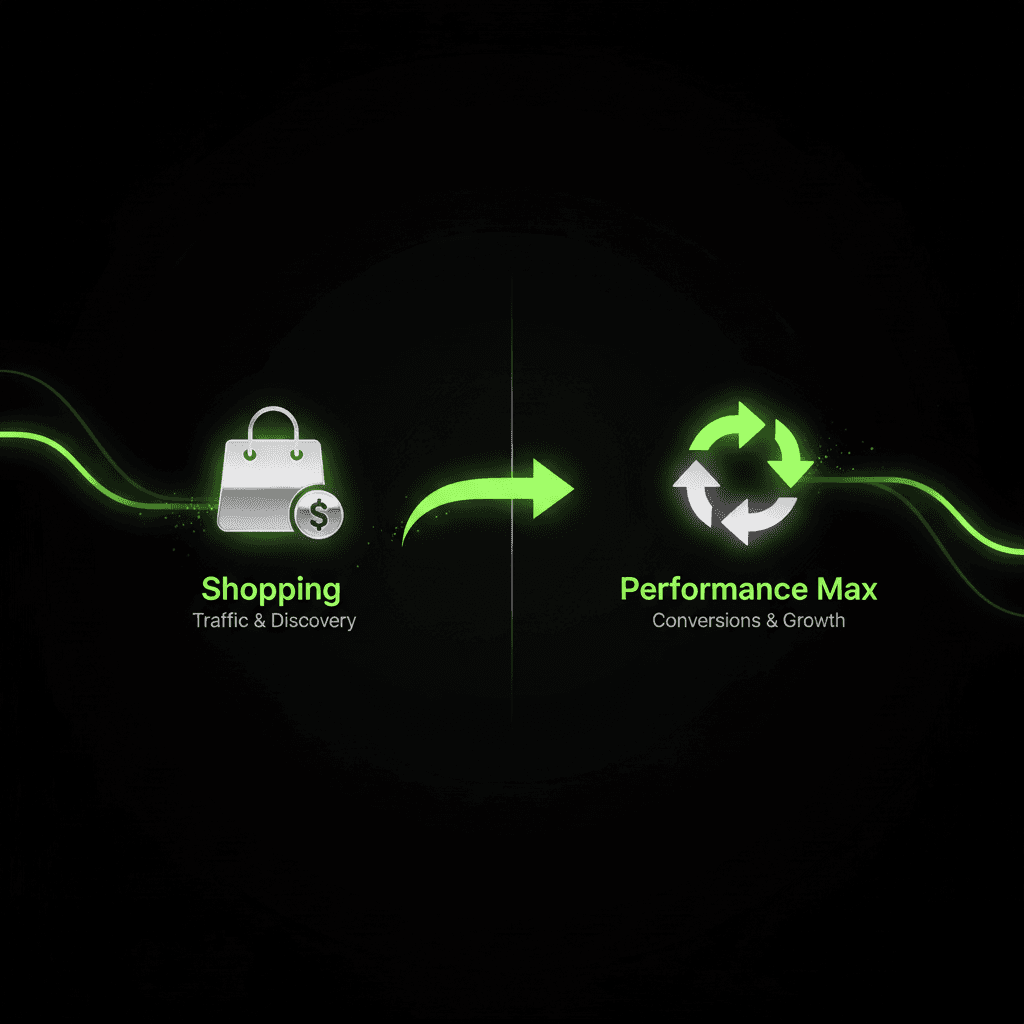
If Performance Max is getting credit for conversions that started with your Shopping campaigns, your data is not broken. Shopping is creating the demand at the top of the funnel. Performance Max is capturing those shoppers later through remarketing and brand searches. When you turn off Shopping because PMax looks better, total performance usually drops a few weeks later. The fix is not choosing one. It is using Shopping for demand creation and Performance Max for demand capture at the same time.
If you have ever launched a Shopping campaign, watched sales go up, and then checked your reports only to see Performance Max taking most of the credit, you are not imagining things.
This is one of the most common attribution problems in Google Ads right now.
Shopping creates the demand.
Performance Max captures the credit.
If you do not understand why this happens, it leads to bad decisions fast.
The Pattern I See Over and Over Again
It usually plays out like this:
You launch or scale Standard Shopping using Max Clicks.
Traffic increases.
Orders increase.
Then you check the campaign breakdown and notice most conversions are attributed to Performance Max.
The client says, “Looks like Performance Max is carrying the account.”
Budgets get shifted.
Shopping gets cut.
Two to four weeks later, performance drops.
Not because Performance Max stopped working.
Because the top of the funnel was shut off.
Why Performance Max Gets the Credit
This is not a glitch. It is how the system is designed.
Performance Max runs across all Google inventory, including Search, Shopping, YouTube, Display, Discovery, and Gmail. That means it can re-engage users later in the buying journey, even if it did not introduce them in the first place.
Attribution also favors the final touchpoint. Whether you use last-click or data-driven attribution, Performance Max often becomes the final interaction.
A user clicks a Shopping ad.
They browse.
They leave.
They come back later through a brand search, a remarketing impression, or a YouTube view.
Performance Max shows up last and takes the conversion credit.
Shopping created the demand.
Performance Max captured the return visit.
Unless you explicitly exclude the brand from Performance Max, it can also bid on branded searches. Those are the cheapest, highest-intent clicks across the entire account. So naturally, Performance Max racks up what appears to be great performance. But in many cases, the shopper only searched your brand because Shopping introduced them earlier.
On top of that, Google does not isolate audiences by campaign. Your Shopping campaigns feed product viewers, cart users, and checkout users directly into Performance Max remarketing pools. In a very real way, Shopping warms the traffic and Performance Max harvests it later.
Why High-Ticket Stores Feel This the Most
This issue is amplified for furniture, nursery products, medical devices, custom products, and anything over $1,000.
These buyers research for days or weeks.
They switch devices.
They share links with partners.
They come back later through brand searches.
That makes Performance Max look like the hero even when it did not start the journey.
How to Prove This in Your Own Account
You do not need to guess. You can prove this with your own data.
Launch Shopping.
Watch total orders increase.
Watch Performance Max conversions increase shortly after.
The timing rarely lies.
You can also exclude brand terms from Performance Max for five to seven days. You will usually see Performance Max conversions drop, Search conversions rise, and total revenue stay close to the same. That is pure credit shift.
In GA4, review first user source and then the final converting campaign. You will commonly see paths like Paid Shopping to Direct to Performance Max, or Paid Shopping to Brand Search to Performance Max. That shows you exactly who introduced the buyer.
The Biggest Mistake Advertisers Make
They turn off Shopping because Performance Max looks better.
That is the fastest way to kill future growth.
Performance Max is not a discovery engine at scale.
It is a demand capture machine.
It needs fuel.
Shopping is often that fuel.
The Correct Strategy for Most E-Commerce Accounts
Shopping should be treated as demand creation.
Performance Max should be treated as demand capture.
You let Shopping introduce new buyers.
You let Performance Max close the ones who return later.
Not either-or.
Both.
How to Explain This to Clients in Plain English
Here is the explanation I use:
Performance Max often captures shoppers later in the decision process after they were originally introduced through Shopping. Because Google assigns the final conversion credit to the last interaction, many of those purchases appear under Performance Max even though Shopping created the demand. The campaigns work together, not against each other.
If that makes sense to a non-marketer, it is the right explanation.
Final Takeaway
If Performance Max is getting credit for conversions that clearly started with Shopping, your data is not broken.
You are seeing cross-network remarketing, brand interception, shared audience pools, and attribution operating exactly as designed.
The worst move is choosing one and cutting the other.
The smart move is understanding which campaign creates demand and which one captures it.
Recent blogs


Dec 1, 2025
Why Performance Max Gets Credit for Shopping Conversions (And What to Do About It)
Seeing Performance Max get credit for conversions your Shopping campaigns clearly influenced? You are not imagining it. Here is why this happens, how to prove it in your own account, and how to structure Shopping and Performance Max the right way.

Conner Crowe
Performance Marketing Strategist
Quick Take
If Performance Max is getting credit for conversions that started with your Shopping campaigns, your data is not broken. Shopping is creating the demand at the top of the funnel. Performance Max is capturing those shoppers later through remarketing and brand searches. When you turn off Shopping because PMax looks better, total performance usually drops a few weeks later. The fix is not choosing one. It is using Shopping for demand creation and Performance Max for demand capture at the same time.
If you have ever launched a Shopping campaign, watched sales go up, and then checked your reports only to see Performance Max taking most of the credit, you are not imagining things.
This is one of the most common attribution problems in Google Ads right now.
Shopping creates the demand.
Performance Max captures the credit.
If you do not understand why this happens, it leads to bad decisions fast.
The Pattern I See Over and Over Again
It usually plays out like this:
You launch or scale Standard Shopping using Max Clicks.
Traffic increases.
Orders increase.
Then you check the campaign breakdown and notice most conversions are attributed to Performance Max.
The client says, “Looks like Performance Max is carrying the account.”
Budgets get shifted.
Shopping gets cut.
Two to four weeks later, performance drops.
Not because Performance Max stopped working.
Because the top of the funnel was shut off.
Why Performance Max Gets the Credit
This is not a glitch. It is how the system is designed.
Performance Max runs across all Google inventory, including Search, Shopping, YouTube, Display, Discovery, and Gmail. That means it can re-engage users later in the buying journey, even if it did not introduce them in the first place.
Attribution also favors the final touchpoint. Whether you use last-click or data-driven attribution, Performance Max often becomes the final interaction.
A user clicks a Shopping ad.
They browse.
They leave.
They come back later through a brand search, a remarketing impression, or a YouTube view.
Performance Max shows up last and takes the conversion credit.
Shopping created the demand.
Performance Max captured the return visit.
Unless you explicitly exclude the brand from Performance Max, it can also bid on branded searches. Those are the cheapest, highest-intent clicks across the entire account. So naturally, Performance Max racks up what appears to be great performance. But in many cases, the shopper only searched your brand because Shopping introduced them earlier.
On top of that, Google does not isolate audiences by campaign. Your Shopping campaigns feed product viewers, cart users, and checkout users directly into Performance Max remarketing pools. In a very real way, Shopping warms the traffic and Performance Max harvests it later.
Why High-Ticket Stores Feel This the Most
This issue is amplified for furniture, nursery products, medical devices, custom products, and anything over $1,000.
These buyers research for days or weeks.
They switch devices.
They share links with partners.
They come back later through brand searches.
That makes Performance Max look like the hero even when it did not start the journey.
How to Prove This in Your Own Account
You do not need to guess. You can prove this with your own data.
Launch Shopping.
Watch total orders increase.
Watch Performance Max conversions increase shortly after.
The timing rarely lies.
You can also exclude brand terms from Performance Max for five to seven days. You will usually see Performance Max conversions drop, Search conversions rise, and total revenue stay close to the same. That is pure credit shift.
In GA4, review first user source and then the final converting campaign. You will commonly see paths like Paid Shopping to Direct to Performance Max, or Paid Shopping to Brand Search to Performance Max. That shows you exactly who introduced the buyer.
The Biggest Mistake Advertisers Make
They turn off Shopping because Performance Max looks better.
That is the fastest way to kill future growth.
Performance Max is not a discovery engine at scale.
It is a demand capture machine.
It needs fuel.
Shopping is often that fuel.
The Correct Strategy for Most E-Commerce Accounts
Shopping should be treated as demand creation.
Performance Max should be treated as demand capture.
You let Shopping introduce new buyers.
You let Performance Max close the ones who return later.
Not either-or.
Both.
How to Explain This to Clients in Plain English
Here is the explanation I use:
Performance Max often captures shoppers later in the decision process after they were originally introduced through Shopping. Because Google assigns the final conversion credit to the last interaction, many of those purchases appear under Performance Max even though Shopping created the demand. The campaigns work together, not against each other.
If that makes sense to a non-marketer, it is the right explanation.
Final Takeaway
If Performance Max is getting credit for conversions that clearly started with Shopping, your data is not broken.
You are seeing cross-network remarketing, brand interception, shared audience pools, and attribution operating exactly as designed.
The worst move is choosing one and cutting the other.
The smart move is understanding which campaign creates demand and which one captures it.
Recent blogs


Dec 1, 2025
Why Performance Max Gets Credit for Shopping Conversions (And What to Do About It)
Seeing Performance Max get credit for conversions your Shopping campaigns clearly influenced? You are not imagining it. Here is why this happens, how to prove it in your own account, and how to structure Shopping and Performance Max the right way.

Conner Crowe
Performance Marketing Strategist
Quick Take
If Performance Max is getting credit for conversions that started with your Shopping campaigns, your data is not broken. Shopping is creating the demand at the top of the funnel. Performance Max is capturing those shoppers later through remarketing and brand searches. When you turn off Shopping because PMax looks better, total performance usually drops a few weeks later. The fix is not choosing one. It is using Shopping for demand creation and Performance Max for demand capture at the same time.
If you have ever launched a Shopping campaign, watched sales go up, and then checked your reports only to see Performance Max taking most of the credit, you are not imagining things.
This is one of the most common attribution problems in Google Ads right now.
Shopping creates the demand.
Performance Max captures the credit.
If you do not understand why this happens, it leads to bad decisions fast.
The Pattern I See Over and Over Again
It usually plays out like this:
You launch or scale Standard Shopping using Max Clicks.
Traffic increases.
Orders increase.
Then you check the campaign breakdown and notice most conversions are attributed to Performance Max.
The client says, “Looks like Performance Max is carrying the account.”
Budgets get shifted.
Shopping gets cut.
Two to four weeks later, performance drops.
Not because Performance Max stopped working.
Because the top of the funnel was shut off.
Why Performance Max Gets the Credit
This is not a glitch. It is how the system is designed.
Performance Max runs across all Google inventory, including Search, Shopping, YouTube, Display, Discovery, and Gmail. That means it can re-engage users later in the buying journey, even if it did not introduce them in the first place.
Attribution also favors the final touchpoint. Whether you use last-click or data-driven attribution, Performance Max often becomes the final interaction.
A user clicks a Shopping ad.
They browse.
They leave.
They come back later through a brand search, a remarketing impression, or a YouTube view.
Performance Max shows up last and takes the conversion credit.
Shopping created the demand.
Performance Max captured the return visit.
Unless you explicitly exclude the brand from Performance Max, it can also bid on branded searches. Those are the cheapest, highest-intent clicks across the entire account. So naturally, Performance Max racks up what appears to be great performance. But in many cases, the shopper only searched your brand because Shopping introduced them earlier.
On top of that, Google does not isolate audiences by campaign. Your Shopping campaigns feed product viewers, cart users, and checkout users directly into Performance Max remarketing pools. In a very real way, Shopping warms the traffic and Performance Max harvests it later.
Why High-Ticket Stores Feel This the Most
This issue is amplified for furniture, nursery products, medical devices, custom products, and anything over $1,000.
These buyers research for days or weeks.
They switch devices.
They share links with partners.
They come back later through brand searches.
That makes Performance Max look like the hero even when it did not start the journey.
How to Prove This in Your Own Account
You do not need to guess. You can prove this with your own data.
Launch Shopping.
Watch total orders increase.
Watch Performance Max conversions increase shortly after.
The timing rarely lies.
You can also exclude brand terms from Performance Max for five to seven days. You will usually see Performance Max conversions drop, Search conversions rise, and total revenue stay close to the same. That is pure credit shift.
In GA4, review first user source and then the final converting campaign. You will commonly see paths like Paid Shopping to Direct to Performance Max, or Paid Shopping to Brand Search to Performance Max. That shows you exactly who introduced the buyer.
The Biggest Mistake Advertisers Make
They turn off Shopping because Performance Max looks better.
That is the fastest way to kill future growth.
Performance Max is not a discovery engine at scale.
It is a demand capture machine.
It needs fuel.
Shopping is often that fuel.
The Correct Strategy for Most E-Commerce Accounts
Shopping should be treated as demand creation.
Performance Max should be treated as demand capture.
You let Shopping introduce new buyers.
You let Performance Max close the ones who return later.
Not either-or.
Both.
How to Explain This to Clients in Plain English
Here is the explanation I use:
Performance Max often captures shoppers later in the decision process after they were originally introduced through Shopping. Because Google assigns the final conversion credit to the last interaction, many of those purchases appear under Performance Max even though Shopping created the demand. The campaigns work together, not against each other.
If that makes sense to a non-marketer, it is the right explanation.
Final Takeaway
If Performance Max is getting credit for conversions that clearly started with Shopping, your data is not broken.
You are seeing cross-network remarketing, brand interception, shared audience pools, and attribution operating exactly as designed.
The worst move is choosing one and cutting the other.
The smart move is understanding which campaign creates demand and which one captures it.